Authorized:











Ski Ergs
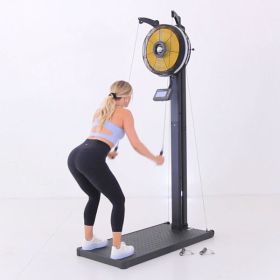


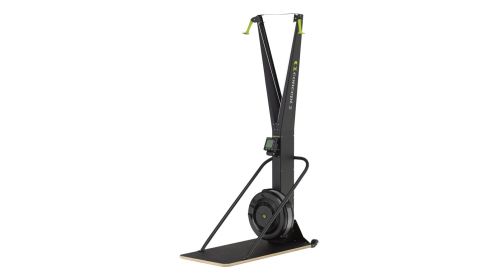

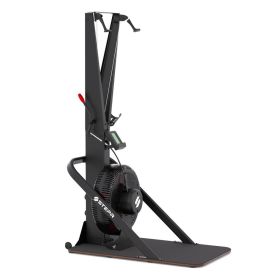
Ski Erg Machine: Pro-Grade Full-Body Cardio
The ski erg machine is the most efficient piece of vertical cardio you can place on any gym floor. A single pull engages your lats, core, glutes, and lungs in one coordinated movement—the kind of conditioning that rowers, treadmills, and bikes only deliver in pieces. This cardio equipment collection brings together commercial-grade ski ergs built for home gyms, CrossFit boxes, HYROX programs, rehab clinics, and high-output training rooms across the United States.
Why a Ski Erg Wins for Full-Body Cardio
Few machines train strength, endurance, and engine in a single stroke—the ski erg does. Modeled on the double-pole motion of cross-country skiing, it loads the upper body and core hard while keeping impact off your knees, hips, and ankles. That balance makes it one of the rare cardio tools that builds aerobic capacity and posterior-chain power at the same time.
What muscles does a ski erg machine work? Each pull recruits the lats, deltoids, triceps, and abdominals as prime movers, while the glutes, hamstrings, and quads drive the hip hinge that powers every stroke. Used with proper form, it delivers a true full-body session — not just an upper-body workout.
The training payoff is dense:
- Builds aerobic and anaerobic capacity in a single session
- Strengthens the posterior chain and grip without barbell loading
- Suits HIIT, steady-state intervals, and HYROX-style conditioning
- Protects joints with smooth, scalable, low-impact resistance
How to Choose the Right Ski Erg
The right ski erg machine matches your space, training style, and how often it will be used. Commercial facilities need overbuilt steel and warranty depth; home owners care most about footprint, noise, and mounting flexibility. Start with the fundamentals—resistance type, monitor capability, and build quality—and then narrow your shortlist by space and budget.
How much space do you need for a ski erg machine? Plan for roughly 2 feet of width, 4 feet of depth, and 7 to 8 feet of ceiling clearance so your arms can reach full extension overhead. Wall-mounted units save the most floor space; freestanding base stands give you easy room-to-room portability.
Key Selection Criteria:
✅ Air or magnetic resistance type
✅ Smooth, full-range pull motion
✅ Commercial-grade steel frame
✅ Bluetooth-ready performance monitor
✅ Wall-mount or floor-stand options
✅ Adjustable damper or resistance levels
✅ Quiet operation for home environments
✅ Replaceable handles and grips
✅ Compact footprint for tight spaces
✅ Trusted brand and warranty support
✅ Low-impact, joint-friendly design
✅ Compatible with major training apps
Who the Ski Erg Machine Is Built For
A ski erg suits anyone who wants serious conditioning without the joint cost of running. It's a staple in CrossFit boxes, HYROX prep gyms, and Nordic ski training rooms, and it earns its place just as easily in home gyms, corporate wellness suites, and clinical settings.
Is the ski erg good for beginners? Yes. The motion is intuitive, the damper is fully adjustable, and you can start with short intervals at light resistance, then scale up as your conditioning improves. Athletes recovering from lower-leg injuries can even kneel or sit to train the upper body and core without loading the legs—though any rehab use should always be cleared with a qualified clinician first.
Common buyer fits:
- Home gym owners chasing a full-body cardio tool in a small footprint
- Commercial facilities, CrossFit boxes, and HYROX programs that need repeatable performance under heavy daily use
- Trainers and coaches who want a scalable conditioning station for clients of every level
- Athletes returning from injury who need low-impact upper-body cardio
- Busy professionals and active seniors who want a 20-minute session that trains the whole body without high impact
Trusted brands carried in this collection include Concept 2 ski training equipment, known for durable, commercially proven builds.
Compare Ski Erg Options at a Glance
Use the comparison below to match a ski erg machine to your space, training style, and ownership goals. Not every spec carries equal weight—identify the two or three that matter most for your use, then narrow your choice from there.
| Feature | What to Look For | Best Fit |
|---|---|---|
| Resistance | Air for race-feel; magnetic for quiet | Air = competitive; magnetic = apartments |
| Mounting | Wall-mount, floor stand, or hybrid | Wall saves space; stand adds portability |
| Monitor | Bluetooth/ANT+ with watts, splits, calories | Athletes and data-driven training |
| Build | Welded steel, powder-coated, replaceable parts | High-volume commercial use |
| Footprint | Under 4 ft depth where possible | Home gyms and garage setups |
| Warranty | Multi-year frame coverage | Long-term ownership and resale value |
Is a ski erg better than a rower? Neither replaces the other. A ski erg drives more upper-body and posterior-chain load through a standing posture, while a rowing machine distributes work across the legs, back, and arms from a seated position. Many serious gyms keep both as complementary conditioning tools.
Setup, Space & Long-Term Ownership
A ski erg is a low-maintenance, long-life investment when you choose a quality build. Most commercial-grade units mount to a stud wall in under an hour or sit on a wheeled floor stand that rolls into a corner between sessions. Routine care is minimal—wipe down the handles after use, check fasteners every few months, and keep the flywheel housing free of dust.
How many calories does a ski erg machine burn? Output varies by body weight, stroke quality, and intensity, but a focused 30-minute session typically delivers a calorie burn comparable to a hard rowing or running effort—without the joint impact. Use it for short HIIT finishers, longer steady-state intervals, or full conditioning workouts.
Plan around these ownership notes:
- Confirm ceiling clearance before ordering a wall-mounted model
- Floor stands add portability but extend the overall footprint
- Bluetooth monitors connect to popular training, racing, and coaching apps
- Replaceable parts can extend useful life well past a decade with regular care
For larger build-outs, commercial fitness equipment packages can pair multiple ski ergs with rowers, racks, and conditioning gear in a single layout.
Order Your Ski Erg Machine Today
Choose a ski erg machine engineered to outlast trends, programs, and seasons. The collection at Hamilton Home Fitness brings together commercial-grade trainers, accessory options, and direct support from a Tennessee-headquartered team that ships nationwide across the United States. Anchor your home gym, equip a CrossFit box, fit out a rehab room, or build a competition-ready HYROX setup—backed by brands trusted by serious lifters and elite athletes.
Need help choosing the right model for your space and goals? Talk to our team for placement, accessory, and program guidance, then check out securely with fast US delivery.
Secure Payments