Introduction
Are you wondering how heavy your dumbbell set should be to achieve the best results in your fitness routine? Choosing the right dumbbell set can make all the difference in your progress, whether you’re aiming for strength, endurance, or general fitness. But with so many weight options available, how do you know which dumbbell set is right for you?
The truth is, the right weight for your dumbbells depends on a variety of factors, including your fitness level, goals, and the exercises you plan to do. In this comprehensive guide, we will explore how to select the perfect dumbbell set that will not only match your needs but also accelerate your progress towards your fitness goals. You’ll learn actionable tips, expert recommendations, and the science behind choosing the right weight.
Whether you’re a beginner or an experienced lifter, understanding the key principles behind dumbbell weight selection can transform your fitness journey. Let’s dive in and discover how to choose the perfect dumbbell set!
Why Choosing the Right Dumbbell Set is Crucial
Selecting the right dumbbell set is essential to reaching your fitness goals. Using weights that are too light can lead to undertraining, making it hard to build strength or muscle. On the other hand, using weights that are too heavy can increase your risk of injury and prevent you from performing exercises with proper form.
The goal is to select a dumbbell set that provides enough challenge without compromising your form or safety. Whether you're training for muscle growth, toning, or general fitness, the right set of dumbbells is the foundation of your workout.
Benefits of Using the Right Dumbbell Set
- Improved Strength and Muscle Tone – With the right weight, you can progressively challenge your muscles, leading to growth and strength gains.
- Reduced Risk of Injury – Using weights that match your fitness level ensures that you don’t strain your muscles or joints.
- Better Workout Efficiency – Choosing the correct weight will allow you to push through plateaus and keep your workouts effective and progressive.
Key Factors to Consider When Selecting Your Dumbbell Set
When selecting a dumbbell set, there are several factors to consider. Let’s break them down to help you make an informed decision.
1. Your Fitness Goals
Your fitness goals should be your first consideration when choosing the weight for your dumbbells. Are you looking to build muscle mass, increase endurance, or tone your body? Here's a breakdown of weight selection based on different goals:
- Muscle Building (Hypertrophy): If your goal is to build muscle, you'll need to challenge your muscles with heavier weights and a lower rep range (8-12 reps per set). This typically means using weights that are around 70-85% of your one-rep max (1RM).
- Endurance Training: If you're focused on endurance or toning, lighter weights are more appropriate (around 40-60% of your 1RM). You can do higher reps (15-20 reps per set) to promote stamina and cardiovascular health.
- Strength Training: For pure strength, you'll use heavier dumbbells that allow for 4-6 reps per set, targeting 85% or more of your 1RM.
2. Your Current Fitness Level
Your fitness level plays a significant role in determining the weight of your dumbbell set. Beginners should start with lighter weights to avoid injury and develop proper form. As your strength improves, you can gradually increase the weight to continue challenging your muscles.
- Beginner: Start with dumbbells between 5-15 pounds to master form.
- Intermediate: If you've been training for a few months, you may want to invest in dumbbells in the 15-30 pound range.
- Advanced: For advanced lifters, dumbbells over 30 pounds may be needed for various exercises like squats, lunges, or overhead presses.
3. The Type of Exercises You Plan to Do
Different exercises require different weights. Compound exercises like squats, deadlifts, and bench presses generally require heavier weights, while isolation exercises like bicep curls, tricep extensions, and lateral raises are typically done with lighter dumbbells.
- For compound exercises: Choose a set of heavier dumbbells (30+ pounds) for exercises like squats and chest presses.
- For isolation exercises: Lighter weights (5-15 pounds) are suitable for exercises like tricep extensions, shoulder raises, and flys.
4. The Number of Dumbbells You Need
The number of dumbbells you need depends on the variety of exercises you plan to do. A single pair of dumbbells may be sufficient for some exercises, but if you're aiming for full-body workouts, a set of dumbbells with adjustable weights or multiple pairs may be beneficial.
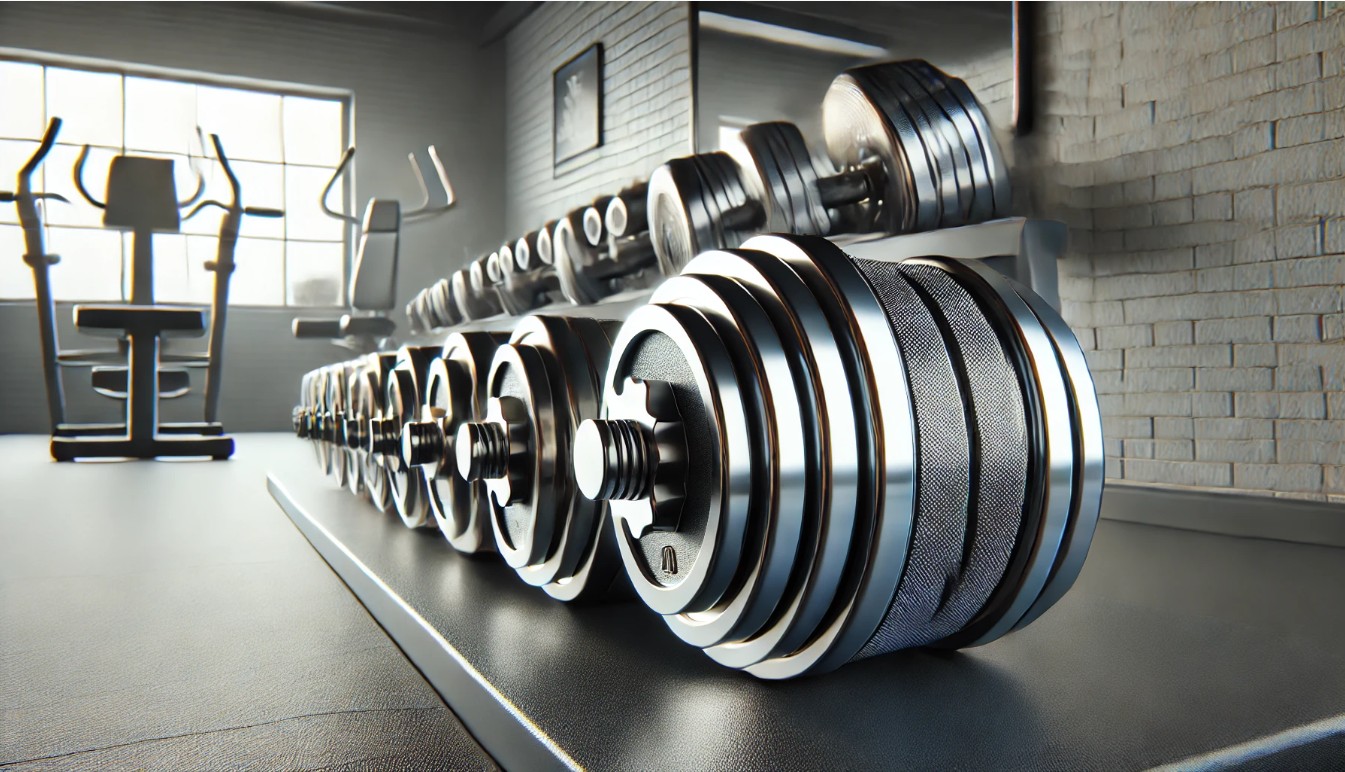
- Adjustable Dumbbell Sets: If you're short on space or prefer variety, adjustable dumbbells are a great option. They allow you to switch weights easily, offering flexibility for your workouts.
- Fixed Dumbbells: If you prefer traditional dumbbells, having a range of weights (light, medium, and heavy) can cater to different exercises.
5. Progressive Overload
Progressive overload is essential for muscle growth and strength. It means gradually increasing the weight you lift over time. When selecting your dumbbells, consider how easily you can increase the weight to ensure continued progress. Adjustable dumbbells are particularly advantageous for this reason.
Choosing the Right Dumbbell Set for Your Fitness Journey
Now that you understand the factors to consider when choosing a dumbbell set, let’s take a deeper look into specific recommendations.
1. For Beginners: Start Light and Progress Gradually
For those just starting, a set of adjustable dumbbells or a light fixed dumbbell set (5-15 pounds) is recommended. It allows you to learn proper form, prevent injury, and gradually increase the weight as your strength improves. This approach sets a solid foundation for long-term progress.
2. For Intermediate Lifters: Build Strength and Muscles
Intermediate lifters who have developed basic form and strength should opt for a wider range of weights. A set of adjustable dumbbells or a collection of dumbbells from 10-30 pounds will give you the versatility to perform both isolation and compound exercises with appropriate resistance.
3. For Advanced Lifters: Push Your Limits
Advanced lifters will need heavier weights to continue challenging their muscles. A heavy-duty set of dumbbells (30+ pounds) is necessary for exercises like overhead presses, deadlifts, and weighted squats. Adjustable dumbbells may still be a good option for advanced lifters who want flexibility in their training.
Research & Sources
To support the recommendations in this guide, we have sourced information from credible studies and expert opinions in the fitness industry. Research has shown that lifting within the 60-85% range of your 1RM promotes hypertrophy (muscle growth), while heavier weights in the 85%+ range are best for strength training. Moreover, experts suggest that gradual progression, also known as progressive overload, is key to continuous improvement.
Some key sources include:
- National Strength and Conditioning Association (NSCA)
- Journal of Strength and Conditioning Research
- Articles from fitness experts like Dr. Jim Stoppani and bodybuilding.com
Frequently Asked Questions (FAQ)
1. How do I know if my dumbbells are too light or too heavy?
If you can easily complete more than 15-20 reps without muscle fatigue, the dumbbells are likely too light. If you struggle to complete 4-6 reps with good form, they may be too heavy. Aim to find a weight that challenges you in the 8-12 rep range for muscle growth.
2. Can I use the same dumbbells for all exercises?
While it’s possible to use the same dumbbells for all exercises, the ideal weight will vary based on the movement. Compound exercises require heavier weights, while isolation movements can be done with lighter weights. It’s helpful to have a range of weights available to cater to different exercises.
3. Should I buy adjustable dumbbells or fixed weights?
Adjustable dumbbells are great for saving space and providing a variety of weights. However, if you have the space and prefer the feel of traditional weights, a set of fixed dumbbells can be an excellent investment.
Conclusion
Choosing the right dumbbell set is a pivotal part of your fitness journey. By understanding your goals, fitness level, and the exercises you plan to perform, you can make an informed decision that sets you up for success. At Hamilton Home Fitness, we pride ourselves on providing the most advanced and durable dumbbell sets that will help you achieve your fitness aspirations. With the right dumbbell set, you’re not just lifting weights—you’re lifting your fitness to new heights.
Don’t wait any longer! Visit Hamilton Home Fitness to explore our premium selection of dumbbells and fitness equipment that will elevate your workouts. Start your fitness journey with the best—start with Hamilton Home Fitness.
Call to Action:
Ready to take your fitness to the next level? Browse our top-rated dumbbell sets at Hamilton Home Fitness and find the perfect fit for your needs today.