Why Should You Focus on Chest and Triceps?
Before diving into the specifics of the workout, it's important to understand why focusing on your chest and triceps is beneficial. Your chest muscles (pectoralis major and minor) and triceps (located on the back of your upper arm) are crucial for a variety of everyday movements. Whether you're pushing open a door, carrying groceries, or performing a push-up, these muscle groups are actively engaged. Developing them not only enhances functional strength but also boosts your overall physique.
Moreover, a strong chest and triceps contribute to better posture, shoulder stability, and enhanced performance in other fitness activities. As a beginner, focusing on these muscle groups will provide a solid foundation for more advanced exercises down the line.
Chest and Tricep Workout at Home for Beginners: What You Need
When you're just starting out, it’s important to keep your workout routine simple and straightforward. You don't need an extensive set of weights or equipment to target your chest and triceps effectively. Here’s what you will need for this beginner-friendly routine:
Equipment Needed:
- A yoga mat (optional but useful for comfort)
- A pair of dumbbells (optional for added resistance in certain exercises)
- A sturdy chair or bench (optional for specific exercises)
The Key Muscle Groups:
- Chest: The pectoralis major and minor, responsible for pushing movements.
- Triceps: The triceps brachii, which is crucial for extending the elbow.
Now, let's dive into the workout itself!
The Best Chest and Tricep Workout at Home for Beginners
1. Push-Ups (Chest)
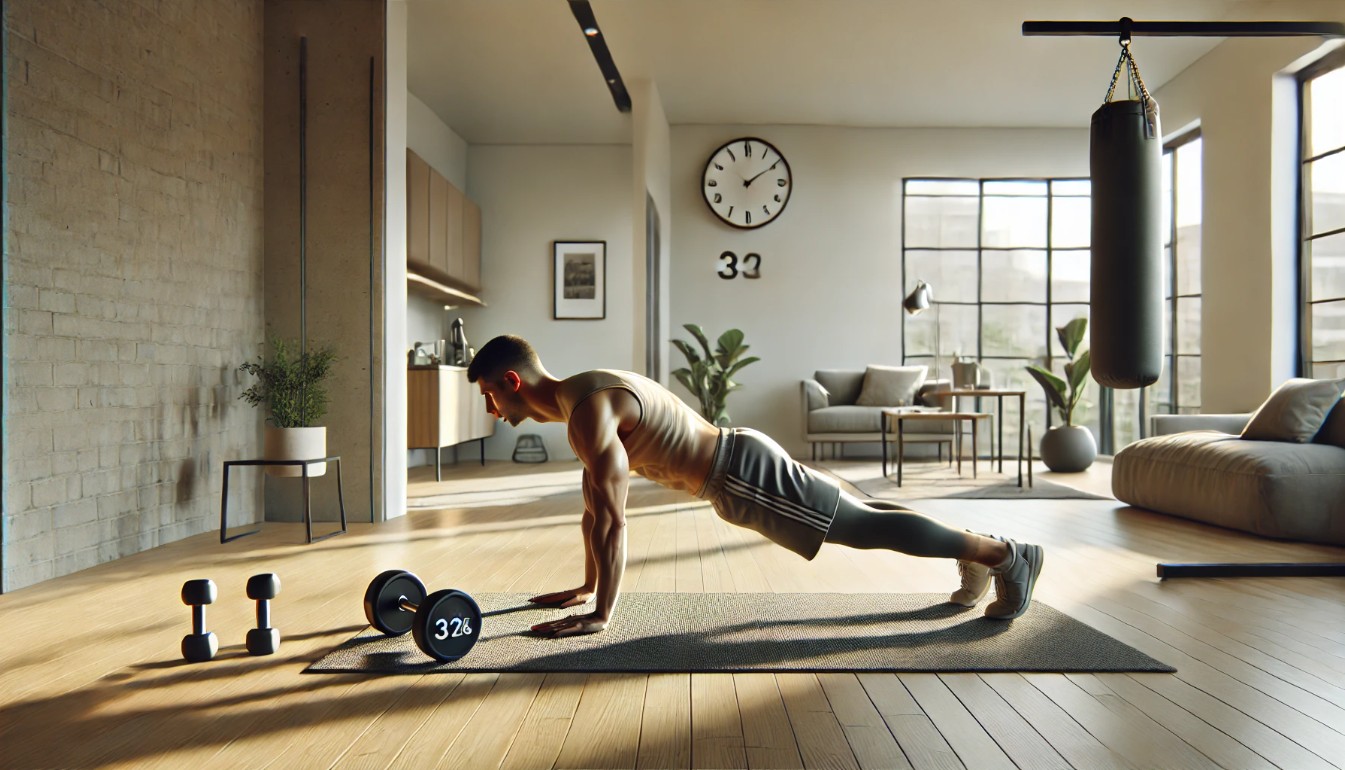
Why It’s Effective: Push-ups are a classic bodyweight exercise that targets the chest, shoulders, and triceps. As a beginner, this movement will help you develop both strength and endurance.
How to Do It:
- Start in a plank position with your hands slightly wider than shoulder-width apart and your body in a straight line from head to heels.
- Lower your body until your chest almost touches the floor, keeping your elbows at about a 45-degree angle from your body.
- Push through your palms to lift your body back to the starting position.
Reps: 3 sets of 8–12 repetitions
Progression: If regular push-ups are too challenging, start with modified push-ups (knees on the floor) and gradually work up to the full version.
2. Tricep Dips (Triceps)
Why It’s Effective: Tricep dips are a simple yet highly effective exercise to target the triceps. You can perform this exercise using a chair, bench, or any sturdy surface.
How to Do It:
- Sit on the edge of a chair, placing your hands next to your hips.
- Slide your butt off the edge, keeping your feet flat on the floor and your knees bent at a 90-degree angle.
- Lower your body by bending your elbows until they form a 90-degree angle.
- Push through your palms to return to the starting position.
Reps: 3 sets of 8–12 repetitions
Progression: To increase the difficulty, elevate your feet on another chair or bench.
3. Incline Push-Ups (Chest)
Why It’s Effective: Incline push-ups are a modification of the traditional push-up, where your hands are elevated on a surface like a bench or chair. This shift in angle places greater emphasis on the lower chest and can be a great progression from regular push-ups.
How to Do It:
- Place your hands on an elevated surface, such as a bench or chair, and get into a plank position.
- Lower your chest towards the surface, keeping your body in a straight line.
- Push back up to the starting position.
Reps: 3 sets of 8–12 repetitions
Progression: If this becomes too easy, you can eventually transition to flat push-ups for added challenge.
4. Close-Grip Push-Ups (Triceps)
Why It’s Effective: Close-grip push-ups target the triceps more intensely than regular push-ups because your hands are placed closer together, requiring more effort from your triceps to extend the elbows.
How to Do It:
- Begin in a standard push-up position but place your hands close together beneath your chest, forming a diamond shape with your thumbs and index fingers.
- Lower your body as you would in a regular push-up, ensuring your elbows stay close to your body.
- Push back up to the starting position.
Reps: 3 sets of 8–12 repetitions
Progression: As you get stronger, you can add a few more reps or switch to elevated feet to increase difficulty.
5. Chest Flys (Chest)
Why It’s Effective: Chest flys help to isolate and stretch the chest muscles, giving you a great contraction at the top of the movement. While this exercise is traditionally performed with dumbbells, you can also do it using resistance bands or simply bodyweight.
How to Do It:
- Lie on your back on the floor or a bench, holding a pair of dumbbells (or resistance bands).
- With a slight bend in your elbows, lower your arms out to the sides in a wide arc.
- Squeeze your chest as you bring your arms back together, avoiding locking your elbows.
Reps: 3 sets of 10-12 repetitions
Progression: Start with a light weight or resistance band and gradually increase as you get stronger.
6. Overhead Tricep Extension (Triceps)
Why It’s Effective: This movement targets the long head of the triceps and helps improve overall arm strength and definition.
How to Do It:
- Stand tall with your feet shoulder-width apart and hold a dumbbell in both hands.
- Extend your arms overhead, keeping a slight bend in your elbows.
- Lower the dumbbell behind your head by bending your elbows, then press it back up to the starting position.
Reps: 3 sets of 10-12 repetitions
Progression: If you have access to a heavier dumbbell, you can increase the weight to challenge your muscles further.
Research & Sources
To back up the effectiveness of these exercises, it’s important to reference scientific studies and expert opinions. Research has consistently shown that bodyweight exercises like push-ups and dips are highly effective for building strength, especially for beginners who may not have access to gym equipment. A 2019 study published in the Journal of Strength and Conditioning Research found that bodyweight training significantly improves muscular endurance and strength, especially when performed regularly.
Furthermore, a study from the American Council on Exercise emphasized that exercises like tricep dips and push-ups are incredibly beneficial for overall upper body strength, improving both muscular endurance and stability. These exercises allow for progressive overload (gradually increasing difficulty), a key principle in strength training.
FAQ (Frequently Asked Questions)
1. How often should I do a chest and tricep workout at home?
For beginners, it’s ideal to perform a chest and tricep workout 2-3 times per week. This allows for adequate recovery time between sessions. As you get stronger, you can increase the frequency or intensity of your workouts.
2. Can I see results without equipment?
Yes! Many of the best chest and tricep exercises can be done with just your body weight, like push-ups and dips. If you have access to basic equipment like dumbbells or resistance bands, you can further enhance your progress, but it’s not necessary for beginners to see significant improvements.
3. How can I increase the difficulty of these exercises?
To make these exercises more challenging, you can:
- Increase the number of sets and reps.
- Elevate your feet or hands (for push-ups and dips).
- Add resistance (dumbbells, resistance bands).
4. Is it okay to combine chest and tricep exercises in the same workout?
Absolutely! Chest and tricep exercises complement each other since both muscle groups are involved in pushing movements. Combining them in a workout helps improve overall upper body strength.
Conclusion
Building a strong chest and triceps doesn’t require fancy gym equipment or hours spent in the gym. With the right exercises and consistency, beginners can make significant progress from the comfort of their home. Incorporate these chest and tricep exercises into your routine, and remember to focus on form, consistency, and gradual progression. Whether you’re training to improve your physical appearance, increase functional strength, or enhance performance, these exercises will serve as a solid foundation for your fitness journey.
Call to Action: Ready to get started? Incorporate these exercises into your home routine today, and watch your chest and triceps grow stronger with each session. Stay consistent, and you'll see noticeable results!