Have you ever wondered if gym machines can be replaced with free weights? It’s a question many fitness enthusiasts, both beginners and seasoned athletes, frequently ask. In the world of strength training, free weights and gym machines each have their own set of benefits. While free weights offer versatility and natural movement patterns, machines have their place, especially for those new to fitness or those looking to isolate specific muscles. But which is the better option? At Hamilton Home Fitness, we understand that choosing the right equipment can make a big difference in your fitness journey. In this article, we’ll dive deep into the pros and cons of both free weights and gym machines to help you determine whether free weights are the right fit for you.
Can You Replace Gym Machines with Free Weights?
The answer to whether you can replace gym machines with free weights depends largely on your fitness goals, experience level, and the type of workout you’re aiming to achieve. Free weights are extremely versatile and can be used to perform a wide variety of exercises that target multiple muscle groups. On the other hand, gym machines provide a controlled environment that can be useful for isolating specific muscles or for those who are just starting their fitness journey. To help you make a more informed decision, let’s look at the differences between gym machines and free weights.
1. Versatility and Range of Motion
One of the primary advantages of free weights is their versatility. With free weights, you have complete control over your range of motion, allowing you to perform exercises that mimic natural body movements. Exercises such as squats, lunges, deadlifts, and overhead presses engage multiple muscle groups and improve functional strength—strength that translates into real-life activities. This natural range of motion is key for anyone looking to improve mobility, coordination, and overall performance.
Gym machines, on the other hand, often limit your range of motion and are designed for specific, isolated movements. For example, the leg press machine focuses primarily on your quadriceps and hamstrings but doesn’t allow for the dynamic movements that free weights do. While machines excel at targeting specific muscle groups, they fall short when it comes to functional strength and mobility, which are essential for daily activities and sports performance.
2. Muscle Activation and Stabilization
When you use free weights, you’re not just targeting the muscle you’re focusing on—you’re engaging your stabilizing muscles, too. For example, when you perform a barbell squat, your body has to work hard to stabilize itself as you move through the range of motion. This increased muscle activation helps improve overall strength and muscle coordination, especially in the core and stabilizing muscles.
Gym machines, on the other hand, are designed to reduce the need for stabilizing muscles by guiding your movements. While this can be beneficial for beginners, who may not have the strength or experience to maintain proper form during free weight exercises, it means that machines don’t engage as many muscles as free weights do. This lack of muscle activation can be a disadvantage for anyone seeking full-body strength or those working toward functional fitness.
3. Effectiveness for Strength and Muscle Building
When it comes to building muscle and strength, free weights generally offer more advantages. Compound exercises like squats, deadlifts, and bench presses are staples in any strength training program and work multiple muscle groups at once. These exercises are great for increasing strength and muscle mass, and they offer superior results when compared to isolated exercises on machines.
Machines are typically used for isolation exercises. For instance, the leg extension machine isolates the quadriceps, and the lat pulldown machine isolates the latissimus dorsi. While these exercises can be effective in building size and strength in specific muscle groups, they don’t offer the same overall benefits as free weights. To maximize strength gains and muscle building, free weights should be prioritized, especially for compound lifts.
4. Injury Risk and Safety
Free weights have a higher risk of injury, especially for those who are new to strength training or who don’t use proper form. Without the guidance of a machine, it’s easy to make mistakes that can lead to strains, sprains, or even more serious injuries. However, with proper form and technique, free weights are a safe and effective way to build muscle and strength.
Gym machines are often considered safer for beginners because they help guide the body through the proper range of motion. This reduces the risk of incorrect form, which can cause injury. Machines are also helpful for individuals recovering from injuries, as they can isolate muscles without putting stress on joints. However, it’s important to note that while machines reduce injury risk, they also limit the development of the stabilizing muscles that are necessary for injury prevention in real-life situations.
5. Space and Accessibility
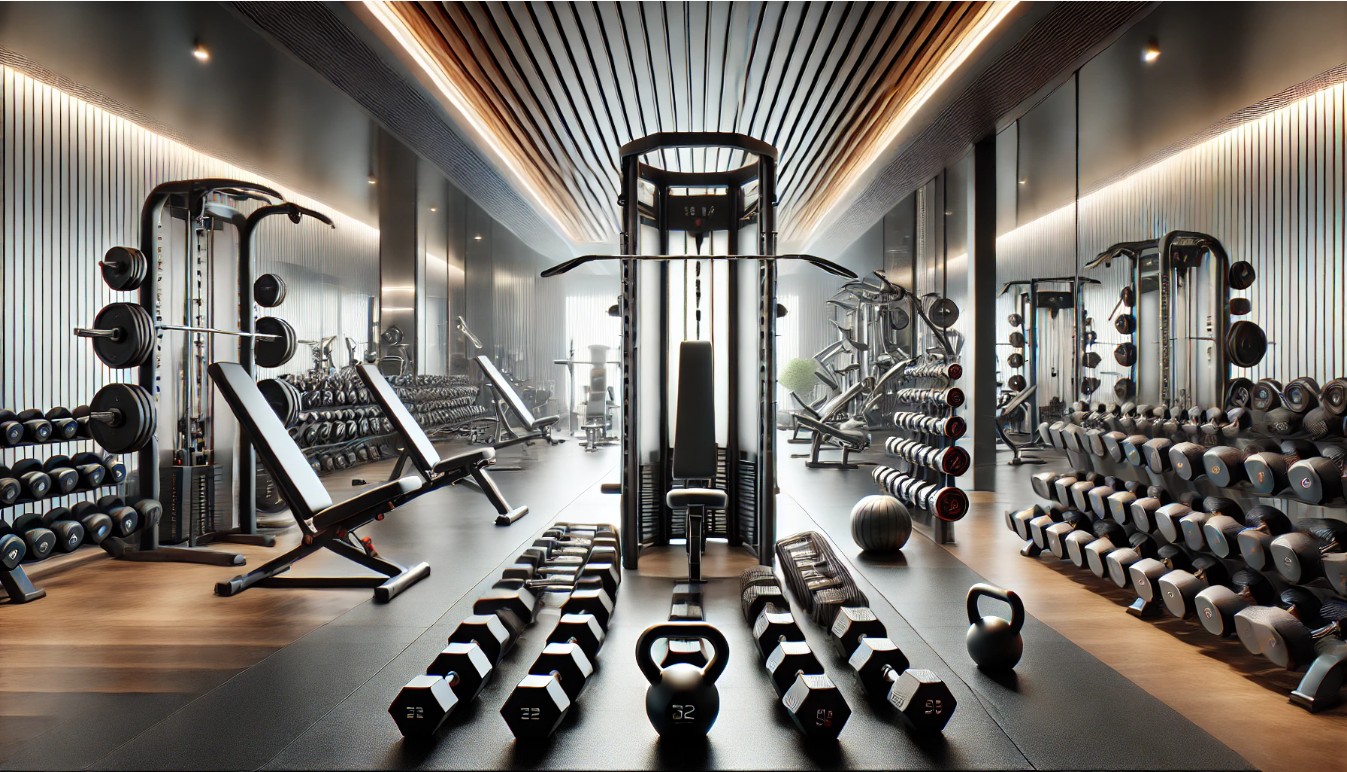
One of the key considerations when building a home gym is the amount of space available. Free weights take up relatively little space, but you’ll need a variety of equipment—dumbbells, kettlebells, barbells, and weight plates. This can add up, but it offers the benefit of versatility and the ability to perform countless exercises with just a few pieces of equipment.
Gym machines, on the other hand, are large and bulky, requiring more space to operate and store. While a single machine might allow you to perform multiple exercises, it may take up more space than free weights. Additionally, gym machines tend to be more expensive than free weights, making them less accessible for those on a budget.
Research & Sources
According to the American College of Sports Medicine (ACSM), free weight training is more effective for building functional strength because it engages stabilizing muscles and promotes natural movement patterns. The National Strength and Conditioning Association (NSCA) supports this by emphasizing that free weights offer a greater challenge and provide better overall results for strength and muscle development.
In real-world case studies, individuals who transition from machine-based workouts to free weights often see faster gains in strength, muscle mass, and overall fitness. Fitness experts at Hamilton Home Fitness also recommend a combination of both free weights and gym machines for those who want the best of both worlds. Machines can be used for targeted isolation and injury recovery, while free weights are ideal for improving overall functional strength.
FAQ
1. Are free weights better than gym machines?
Free weights are typically better for overall strength and muscle development because they engage more muscles. However, gym machines are useful for beginners or for isolating specific muscles.
2. Can I build muscle with free weights?
Yes! Free weights are excellent for muscle building. Compound exercises like squats, deadlifts, and bench presses are key to developing muscle and strength.
3. Which is safer, free weights or gym machines?
Gym machines are safer for beginners as they guide the body through the exercise. However, free weights can also be safe when used with proper form and technique.
4. Should I use both free weights and machines?
Yes, combining free weights and machines can provide a balanced workout. Free weights are great for functional strength, and machines are ideal for targeting specific muscles or for beginners.
5. How do I choose between free weights and gym machines?
Consider your fitness goals. Free weights are better for overall strength, while machines are useful for isolating muscles or for beginners who need guided support.
Conclusion
In conclusion, both gym machines and free weights have their strengths. Free weights are the go-to option for building functional strength, increasing muscle mass, and improving overall performance. They offer more versatility and muscle activation, making them ideal for those looking to improve their fitness. On the other hand, gym machines are a safer and more controlled option, particularly for beginners or for those recovering from an injury.
At Hamilton Home Fitness, we believe the best approach is to combine both free weights and machines in your fitness routine. This way, you get the benefits of both worlds—functional strength and muscle building, along with targeted isolation and safety. Whether you’re a beginner or a seasoned athlete, we’ve got the tools and equipment you need to reach your fitness goals.
Ready to take the next step in your fitness journey? Explore our premium collection of free weights and fitness equipment at Hamilton Home Fitness. Our team is here to help you find the best solutions for your workout needs.
Visit Hamilton Home Fitness to get started today!