Authorized:











BodyKore GR635 Selectorized Rotary Hip
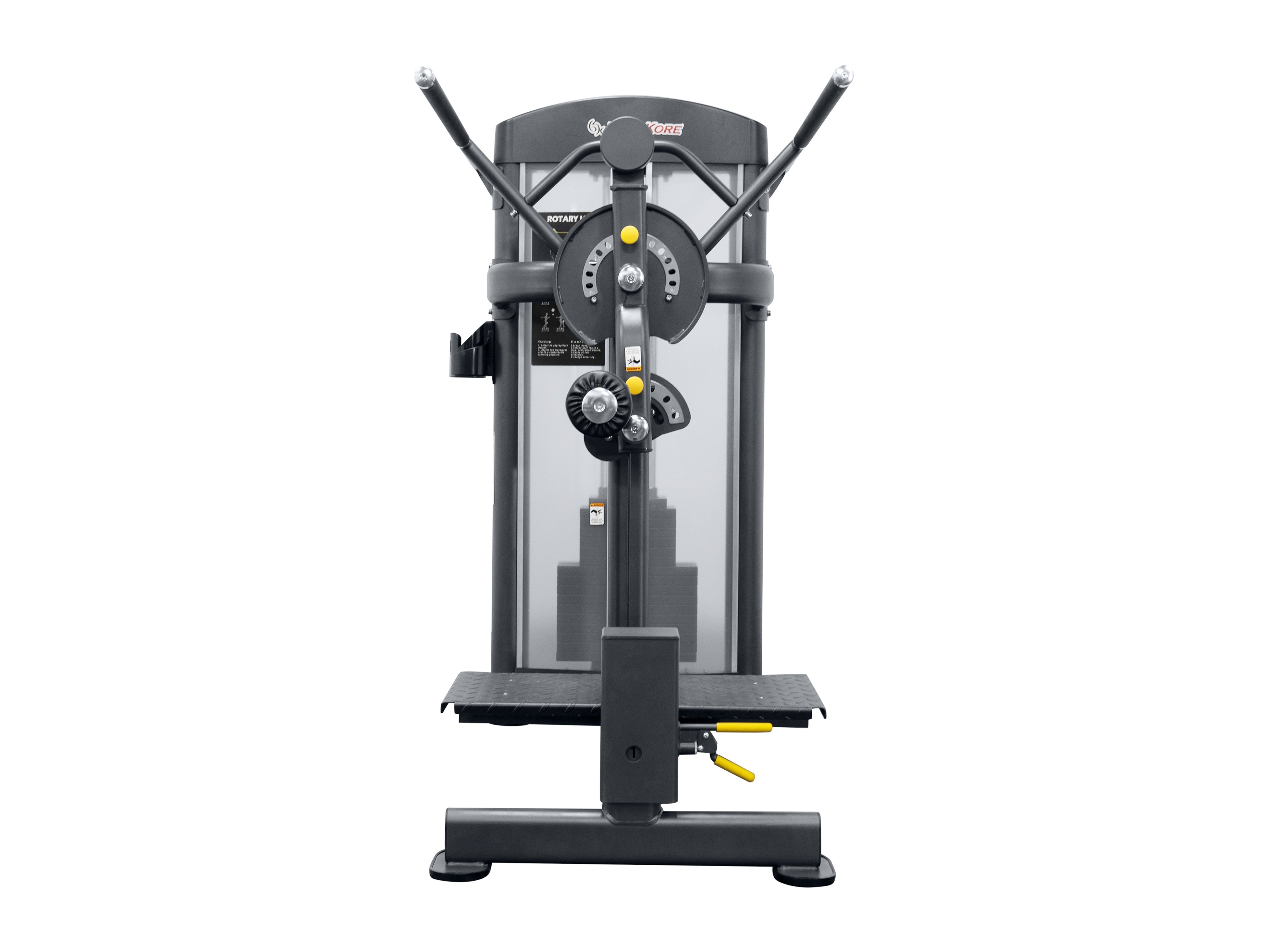
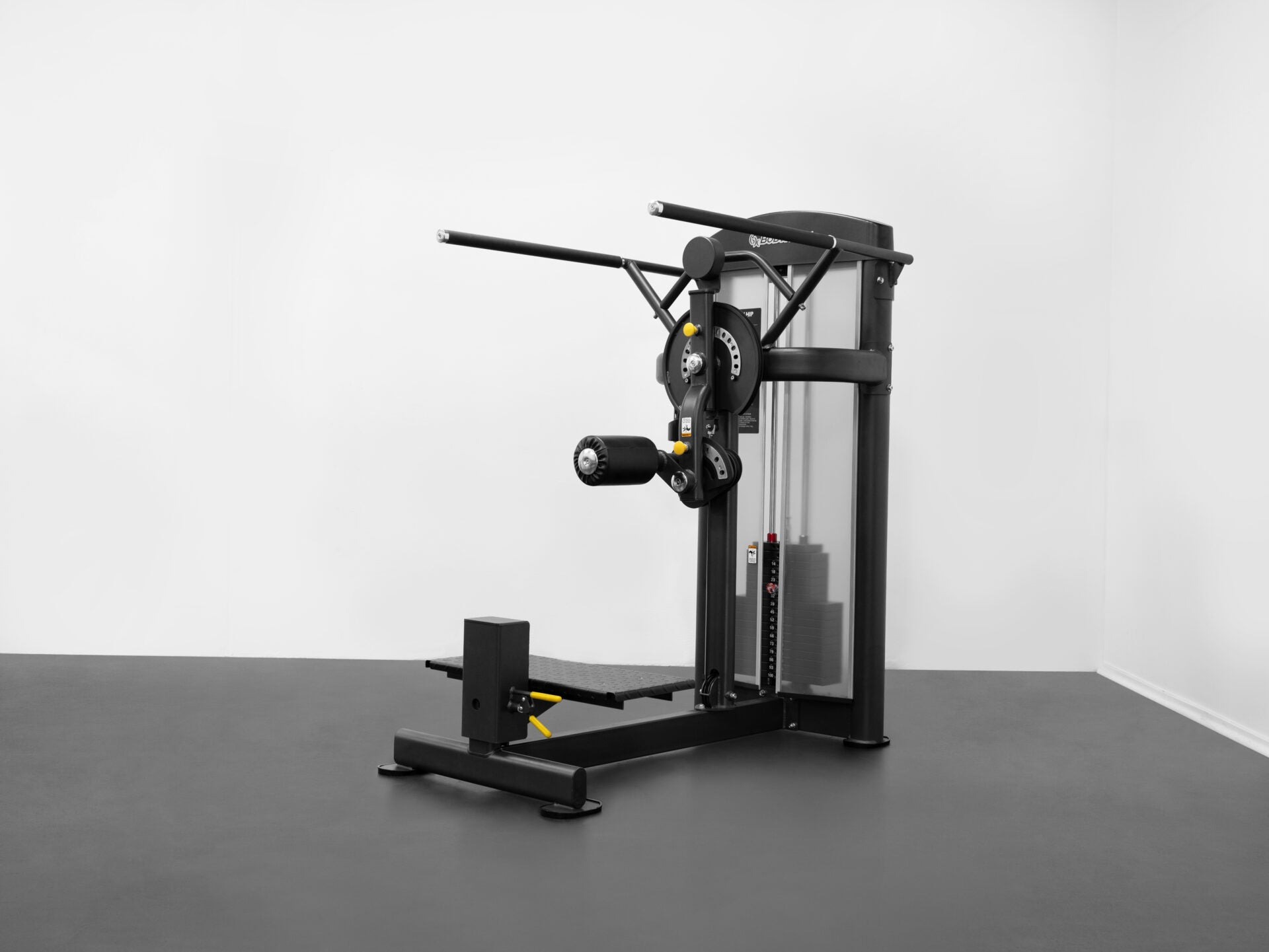
Rotary hip machine: BodyKore GR635
Rotary hip machine, real hip control
A rotary hip machine trains the hips the way life and sport use them: standing, braced, and moving on a smooth arc. It helps fix weak hips that can show up as shaky knees, slow cuts, or a low back that works too hard.
Your hip can move forward/back, out/in, and rotate. But most days use only small angles. Strength and control fade unless you train them on purpose.
Outer-hip muscles like the gluteus medius and minimus help keep the pelvis level when your foot is on the ground. That’s why hip work matters for runners, lifters, and rehab plans.
Train on this rotary hip machine to improve the following:
- Abduction/adduction (leg out/in).
- Flexion/extension (knee forward/leg back).
- Pelvic control (balance + brace).
Built for: Home Fitness Enthusiasts; Commercial Fitness Facilities; Fitness Professionals and Trainers; Socially Conscious Consumers; Individuals Seeking Personalised Fitness Solutions; Health and Wellness Enthusiasts; Corporate Wellness Programs; Luxury Fitness Equipment Shoppers; Consumers Seeking Equipment for Rehabilitation or Recovery; Budget-Conscious Buyers; Fitness Influencers and Bloggers; Small Gym and Studio Owners; Sports Teams and Athletic Programs; Faith-Based Consumers; Environmental-Conscious Consumers; Young Professionals and Millennials; Retirees and Seniors; Families and Parents; Eco-Conscious Fitness Enthusiasts; Fitness Hobbyists and Weekend Warriors.
Selectorized Rotary Hip Features
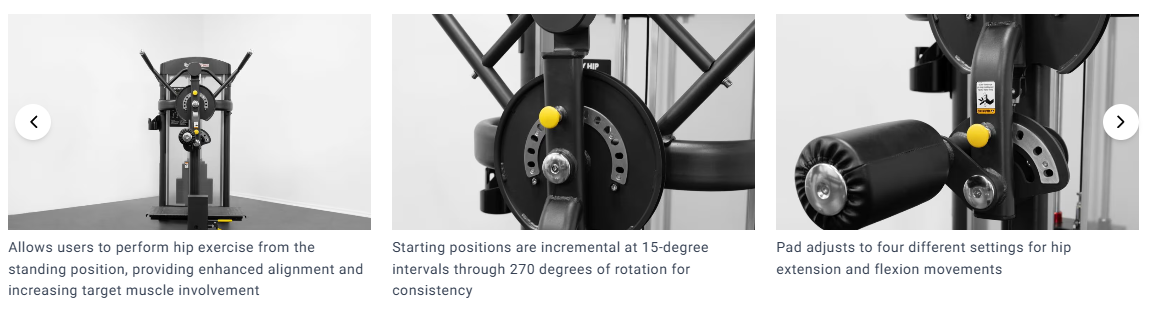
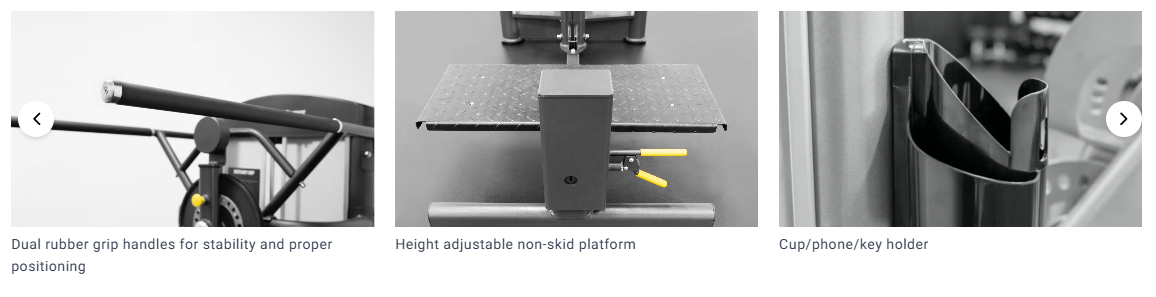
Rotary hip machine design: GR635
The BodyKore GR635 is a commercial-grade rotary hip machine made for daily use.
It’s a simple, low-fuss build that helps keep upkeep easy.
It uses independent converging and diverging motion, so the path feels smooth and natural.
Ergo-form cushions support good position (alignment).
The standing platform is height-adjustable and non-skid, so you can brace with ease.
The unit is rated to hold over 1000 lbs.
Rotary hip machine adjustments
- Standing-position training for better alignment.
- Start positions in 15° steps through 270°.
- Pad adjusts to four settings (fit + focus).
- Dual rubber grips for strong bracing.
- Cup/Phone/Key holder.
Rotary hip machine key features
✅ Standing multi-plane hip training.
✅ 270° arc for range precision.
✅ 15° start stops for repeat reps.
✅ Four pad positions for fit.
✅ Weight stack, fast swaps.
✅ Smooth, natural motion tracking.
✅ Dual grips for strong bracing.
✅ Non-skid platform for stability.
✅ Rolled steel oval tubing frame.
✅ Upgrade-ready 220→340 lb stack.
How to use a rotary hip machine
Set the pad just above your knee.
Grip the handles.
Stand tall.
Move from the hip, not the low back.
Pick a range you can control.
Make each rep match the last.
Progress is easier when your reps look the same.
Rotary hip machine setup cues
- Pick the direction: flexion, extension, abduction, or adduction.
- Set a start angle you can control for 8–15 reps.
- Keep ribs stacked over hips, eyes forward.
- Move the knee on a clean path. No swing.
Rotary hip machine tempo rule
Use 2–1–2 (out–squeeze–back).
If the pelvis shifts, drop the load or shorten the range.
Rotary hip machine programming
This rotary hip machine gives the hips a lot of work with low stress on the spine.
Rotary hip machine rep schemes
- Strength: 3–5 sets × 6–8 reps.
- Muscle gain: 3–4 sets × 10–15 reps.
- Control: 2–3 sets × 12–20 reps.
- Athletic prep: 2–3 sets × 8–12 each direction.
Proof in practice: pick two “house angles” (mid + end) and log them.
It keeps sessions fast and repeatable in a busy gym.
Many rehab plans build from simple holds to stronger hip work and balance.
A supported standing machine can fit that path when a clinician clears loading.
Specs, warranty, downloads
Rotary hip machine specs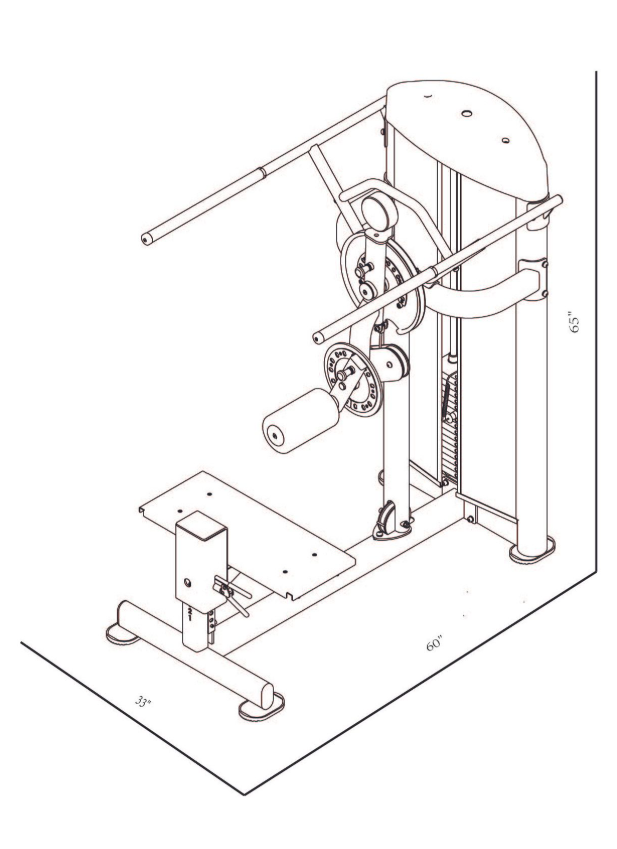
- Dimensions: 60" × 33" × 65".
- Footprint: 15 sq ft.
- Frame: Rolled Steel Oval Tubing; Black or Silver.
- Weight stack: 220 lb; can upgrade to 340 lb.
- Adjustable height positions: 4.
- Unit weight note: The product page lists 526 lb; the datasheet image lists 465 lb—confirm the version in your quote.
Rotary hip machine warranty
Strength Warranty (North America only):
- Frame (not coatings) lifetime: weight stacks 10 years;
- Pulleys 10 years;
- pivot bearings 10 years;
- other items not specified: 3 years.
- upholstery/cables/springs/grips 1 year;
- accessories 6 months.
Rotary hip machine downloads
People Also Ask
What muscles does a rotary hip machine work? Hip flexors, glutes, adductors, and abductors (outer-hip muscles).
Is a rotary hip machine good for rehab? Often yes, because range and load are controlled—when cleared for you.
How heavy should I go? Light enough to stay still. Heavy enough to stay slow.
How often should I train hips? 2–3 focused sessions per week works for most people.
Does it help athletic performance? Strong hips help transfer force in sprinting and cutting.
Want a Tennessee-based partner who ships to all US states?
Visit Hamilton Home Fitness and secure your GR635 rotary hip machine now.
Secure Payments