Authorized:











BodyKore G253 Olympic Decline Bench

Decline Bench Press Bench (Olympic)—BodyKore G253
If your decline bench press is limited by shaky benches, awkward setups, or “good enough” frames, this is your upgrade. The BodyKore G253 Olympic Decline Bench is built for serious barbell work—home or facility—so you can load heavy, brace hard, and focus on crisp reps instead of wobble, mis-racks, or cramped leg position.
Modifiers (high-intent terms): commercial-grade, Olympic, heavy-duty, plate storage, Signature-style build, 1,000+ lb rated.
The one problem this bench solves
A purpose-built decline bench press station solves one problem: it keeps your setup repeatable when the bar gets heavy. Small issues on generic benches—bench shift, slippery contact, inconsistent leg lock—steal performance and raise risk. A dedicated frame fixes that with stable geometry, rack hardware designed for barbells, and a pad layout made for decline pressing.
What that means in real training:
- Faster setup between sets (less fiddling, more work)
- Cleaner bar path because your body isn’t sliding
- Safer unracks and reracks when fatigue hits
Built for commercial stability and fast training flow
The G253 uses a wide, angled A-frame footprint and heavy-gauge steel so the bench feels planted under load. The finish is a durable powder coat, and the bar hooks are zinc-coated to resist wear from repeated bar contact. That’s not “marketing durability”—it’s the difference between a rack you trust and a rack you babysit.
Hardware that respects your bar
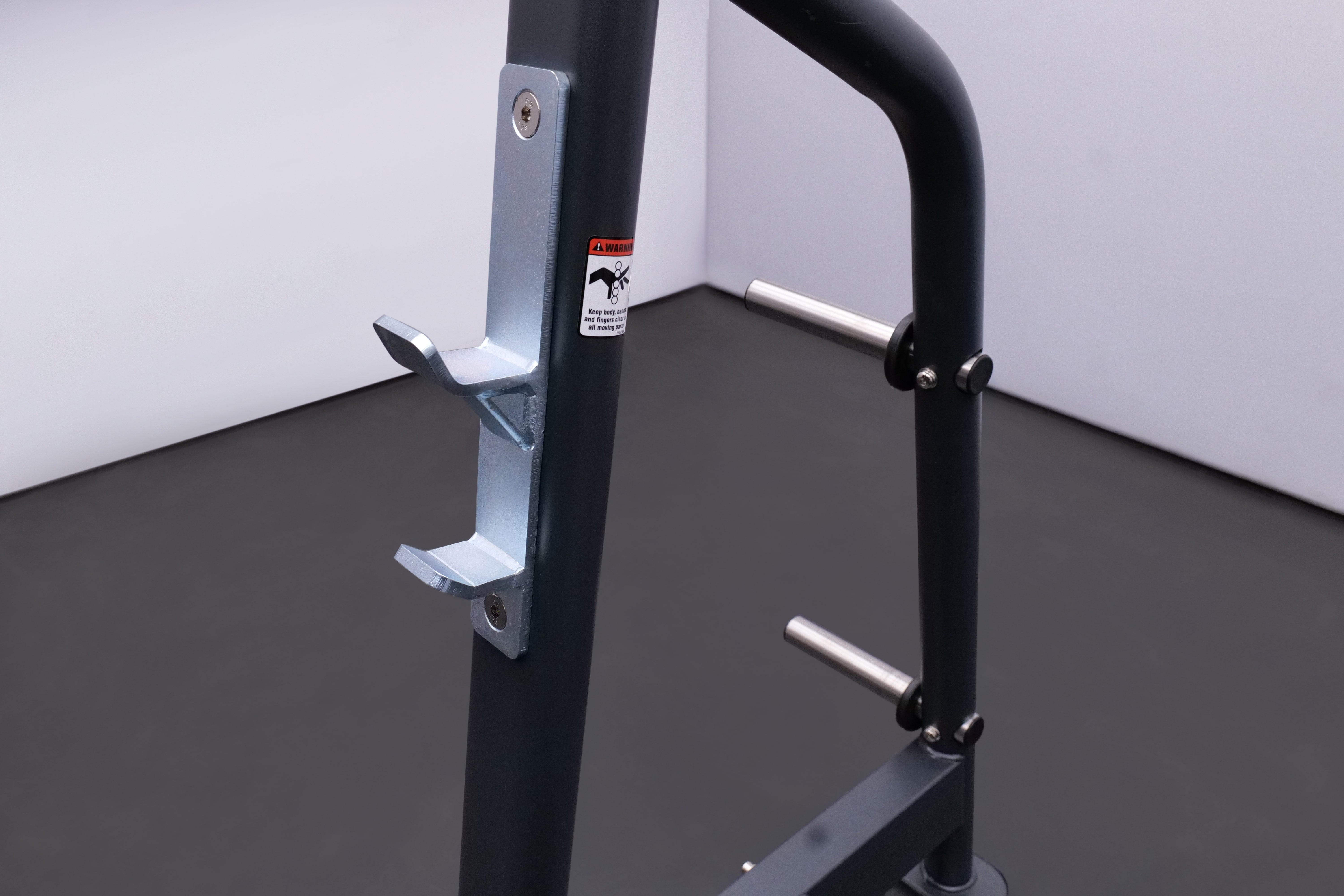
Zinc-coated hooks help stay smooth and consistent over time, so reracks feel predictable even when you’re training hard. When your set ends, you shouldn’t be hunting for the hooks.
Plate storage that keeps training moving
Four integrated plate pegs keep working weights close. In a home gym, it reduces floor clutter and keeps transitions sharp.
Fit, setup, and technique for advanced lifters
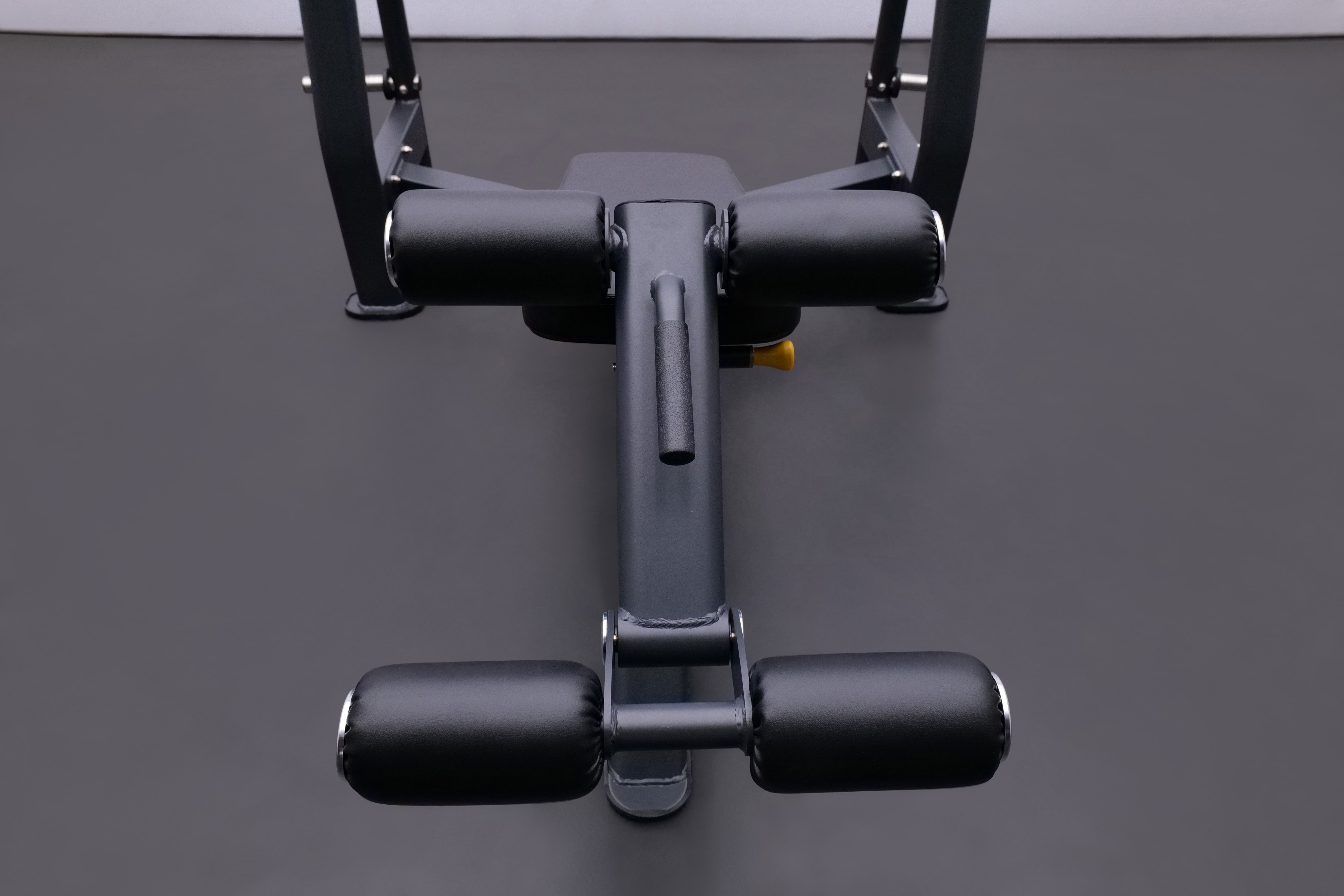
This bench is made for standard 7’ Olympic bars and Olympic plates. Adjustable leg holders help you lock in your position across different heights, which is essential for a strong decline bench press. If the leg hold is “off,” your hips drift, your touch point changes, and the set turns messy.
Quick setup checklist (do this every time)
- Set leg holders so hips stay pinned, not drifting
- Pull shoulder blades back and down before unracking.
- Keep wrists stacked and forearms vertical at the bottom
- Touch with control; drive the bar back toward the rack line
Why decline pressing belongs in a serious program
The decline angle can feel friendlier for many lifters’ shoulders because it changes how the upper arm tracks during pressing while still loading the chest and triceps heavily. The goal isn’t to replace the flat bench—it’s to add a high-output variation you can progress hard with.
Common mistakes to avoid
- Rushing the unracking with loose shoulders
- Letting hips slide from poor leg-holder fit
- “Diving” the bar too low and losing control
- Strength focus: 3–5 sets × 3–6 reps
- Size focus: 3–4 sets × 8–12 reps with strict tempo
Key features (premium build, practical details)
✅ Wide A-frame stability footprint
✅ Heavy-gauge steel construction
✅ Durable powder coat finish
✅ Zinc-coated bar hooks
✅ Adjustable leg holder system
✅ Rubber feet protect flooring
✅ Four plate storage pegs
✅ Wide pad for steady contact
✅ Standard 7’ Olympic bar fit
✅ Commercial 1,000+ lb rating
✅ Timeless black, clean profile
Best for:
- Home gyms chasing commercial feel
- Clubs and studios needing durability
- Coaches running athlete groups
- Lifters progressing heavy accessories
People Also Ask
Is the decline bench press better for the lower chest?
It can emphasize the lower portion of the chest for many lifters, but results depend on anatomy, grip, and bar path. Use it as a targeted variation and track progress like any other lift.
Does the decline bench press reduce shoulder strain?
Often, it can feel easier on the shoulders because of the angle, but good scapular position and controlled depth still matter.
What bar fits an Olympic decline bench?
A standard 7’ Olympic bar is the expected match. Use collars to keep plates tight and the setup secure.
How do I stop sliding on a decline bench?
Fix the fit first: set the leg holders so your hips stay pinned. Then keep your upper back tight and avoid bouncing reps.
How much weight can this bench handle?
The G253 is commercial grade and rated to hold over 1,000 lbs total, giving advanced lifters and facilities a high-confidence platform when used with safe unracks and controlled reracks.
Make your next set feel inevitable
If you want a decline bench press station that feels stable, professional, and built for years of hard use, the BodyKore G253 is the straightforward choice. You get a dedicated decline platform, durable rack contact points, and plate storage that keeps training moving.
Explore it at Hamilton Home Fitness and upgrade your decline bench press bench today.
Manuals
Data Sheets
Secure Payments