










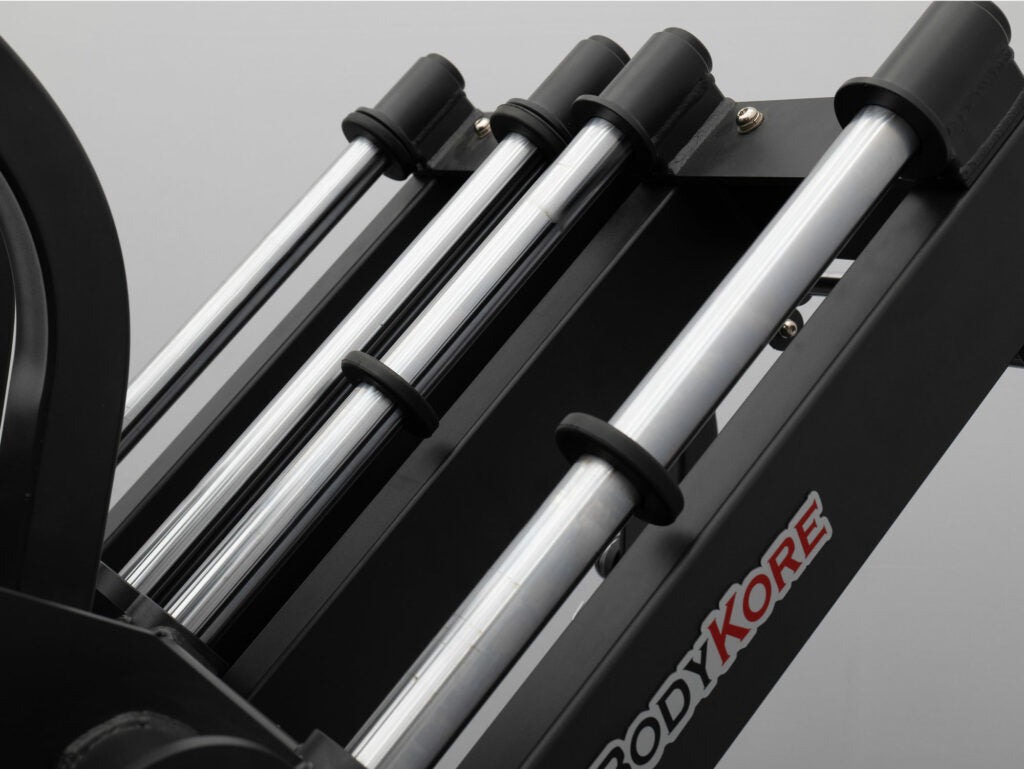
Plate Loaded Leg Press | BodyKore FL1801
If you want a plate-loaded leg press that feels planted, smooth, and serious from the first rep, this is it. The BodyKore FL1801 is built for buyers who want commercial-grade lower-body training with isolateral freedom, guided safety, and the kind of finish that looks right in a premium home gym or a hard-working facility. It is designed to train calves, thighs, glutes, and hamstrings while supporting both bilateral and unilateral work through a smooth linear pressing path.
For Tennessee buyers and customers across the USA, this machine makes a strong case fast. Hamilton Home Fitness positions itself around premium equipment for home gyms, commercial facilities, rehab settings, studios, and sports spaces, which makes this FL1801 a natural fit for serious shoppers who want one clear solution: heavy lower-body training without a cluttered, compromised setup.
Here is why this machine keeps getting attention from experienced buyers:
- It supports dual-leg and single-leg pressing
- It uses linear guide rods for smooth motion
- It includes guided safety lock points
- It gives you 4 loading pegs and 4 storage pegs
- It uses a 7-position adjustable lumbar seat
- It is built on a heavy-duty commercial frame
Why it feels different
This machine stands out because it does more than move weight. It gives you controlled, repeatable leg work with a guided path, a pivoting press plate, and an easy transition between heavy bilateral sets and more focused isolateral work.
Iso training that works
The FL1801 is built around a pull-pin guide rod that lets you switch between iso and dual-leg press modes. That matters. When a machine gives you the option to press together or train one side at a time, it becomes more useful for athletes, trainers, rehab-minded buyers, and anyone who wants cleaner lower-body programming. BodyKore also pairs that versatility with a flip-in, flip-out mechanism, consistent resistance through the full range of motion, and a design intended to reduce ankle stress.
What that means daily
In real use, this is the kind of machine that keeps earning its place. You can load it heavily for demanding lower-body work, then shift into more concentrated single-leg training without changing the entire flow of your session. That makes the plate-loaded leg press feel less like a one-note machine and more like a smart, long-term investment for strength, symmetry, and confident progression.
Built for hard training
The short answer: this machine is overbuilt in the right places. It is designed for serious loading, repeated use, and buyers who care about stability as much as they care about resistance.
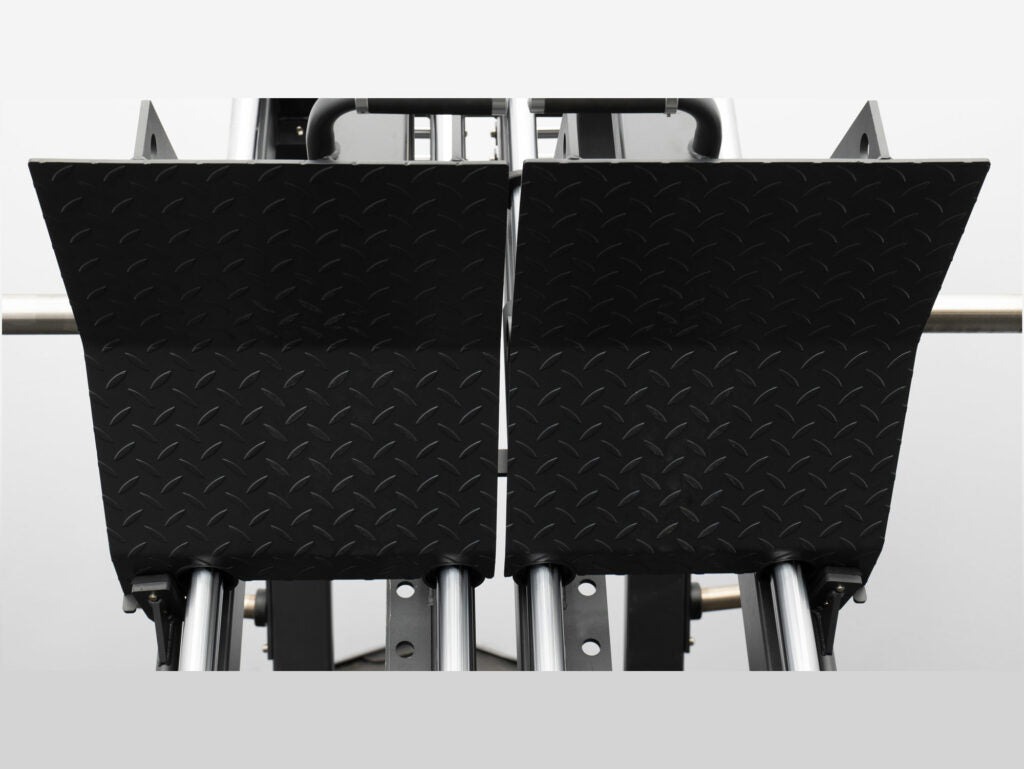
BodyKore lists 4 plate loading pegs with a total load capacity of up to 2,475 lbs, plus 4 bolt-on stainless steel storage posts to keep plates close. You also get a pop-pin adjustable lumbar seat, adjustable spring safety stops, a multi-angle diamond-tread foot deck, rubber grip handles, band pegs for added resistance support, and linear ball bearings for smooth action. The machine is also described as commercial grade and rated to hold over 1,000 lbs, while the product page notes more than 60% of true weight in average resistance for focused double and single-leg exercises.
There is also a design detail buyers notice right away: the finish looks premium, not flimsy. BodyKore specifies a black powder texture. Coat the weight peg assembly, spring stops, locking handles, and foot deck for grip and durability, while the main frame and storage post mounting plates carry a medium gloss black finish. That blend gives the machine a clean commercial look without losing traction where it matters.
Premium features
This plate-loaded leg press is loaded with buyer-friendly details:
✅ 7-position lumbar seat
✅ Dual-angle footplates
✅ Rubber grip handles
✅ Band pegs for overload
✅ Linear guide rods
✅ Smooth linear leg path
✅ Guided safety lock points
✅ Iso or dual-leg mode
✅ 4 loading pegs
✅ 4 storage pegs
✅ Diamond-tread foot deck
✅ Heavy-duty steel frame


Specs you should know
Here’s the practical answer: the FL1801 is a large, true commercial-style unit, so you should plan around its footprint, weight, and final install height before it arrives.
- Dimensions: 87" x 63" x 72" on the product page; the current datasheet shows 87" x 63" x 73"
- Unit weight: 783 lbs
- Platform size: 20.47 x 16.46
- Frame: heavy-duty commercial-grade steel tubing
- Frame color: black
- Starting weight: 55 kg on each side
- Warranty: lifetime frame (not coatings), 10 years on weight stacks, pulleys, and pivot bearings, 3 years on other unspecified items, 1 year on upholstery/cables/springs/grips, and 6 months on accessories
That small height discrepancy between the product page and datasheet is exactly the kind of detail smart buyers catch early. It is worth confirming before delivery if ceiling clearance is tight.
Questions buyers ask
Most shoppers are really asking four things: will it fit, will it challenge me, will it feel smooth, and will it be easy to live with once it arrives? This machine gives strong answers on all four.
Is this plate-loaded leg press good for a home gym?
Yes, if your space and floor can support a true commercial-style machine. At 783 lbs and roughly 87" long by 63" wide, it is not a casual add-on. It is for buyers who want a premium centerpiece, not a flimsy compromise.
Can I train one leg at a time?
Yes. The FL1801 supports bilateral and unilateral pressing, and the pull-pin guide rod is designed to switch between iso and dual-leg modes.
Do I need a spotter?
BodyKore states that the guided motion and safety locking points help eliminate the need for a spotter. That is a big confidence boost for solo training.
Where can I find setup details before I order?
The owner’s manual says assembly takes about 120 minutes, and longer if this is your first time assembling a machine like this. You can review the Download Manual and Download Datasheet before checkout.
If you have been waiting for a plate-loaded leg press that feels polished, presses smoothly, and looks every bit as serious as the training it supports, the BodyKore FL1801 is a strong answer. Shop it through Hamilton Home Fitness, and give your gym a machine that brings together premium design, hard-use strength, and real-world versatility for home or commercial use.
Video


Gallery