Introduction
Do you experience back pain when bent over barbell rows? If so, you're not alone. Many people face this issue. The bent over barbell row is a great exercise for building back strength, but it can cause discomfort if done wrong.
When you bend over to lift the barbell, your lower back takes much pressure. If your form is off, this pressure can lead to pain or even injury. But don't worry – it doesn't have to be that way. With the right technique, you can avoid back pain and still get the full benefits of this powerful move.
In this article, we'll show you simple steps to help you lift safely. These tips will teach you how to keep your back safe while improving strength. By following them, you'll be able to perform bent over barbell rows without pain and see better results.
Importance of Proper Form in Bent Over Barbell Rows
When it comes to avoiding back pain when bent over barbell rows, your form is everything. The key to preventing injury lies in how you position your body throughout the exercise. If your form is off, you put unnecessary strain on your lower back. Let's break down why this matters and how to get it right.
First, it's important to understand the basic movement. Bent over barbell rows target the muscles in your upper back, such as your lats, traps, and rhomboids. But they also engage your lower back, core, and legs for stability. This means that improper technique doesn't just affect your back—it can throw your whole body out of alignment.
Why Form Matters:
- Spine Alignment: Keeping a neutral spine is key. When you round or arch your back, you risk putting excess pressure on your lower back. This can lead to strain or even injury over time.
- Muscle Activation: Proper form helps activate the right muscles. When your back is straight, and your core is engaged, you're better able to target the muscles of your upper back rather than relying on your lower back to do all the work.
- Joint Health: By using the correct form, you distribute the weight evenly across your body, reducing the strain on your joints, particularly the lower back and shoulders.
In short, maintaining proper form during bent-over barbell rows is crucial for avoiding pain and maximizing the exercise's effectiveness. Without it, you risk injury and slow down your progress.
Step-by-Step Guide: How to Perform a Bent-Over Barbell Row Correctly
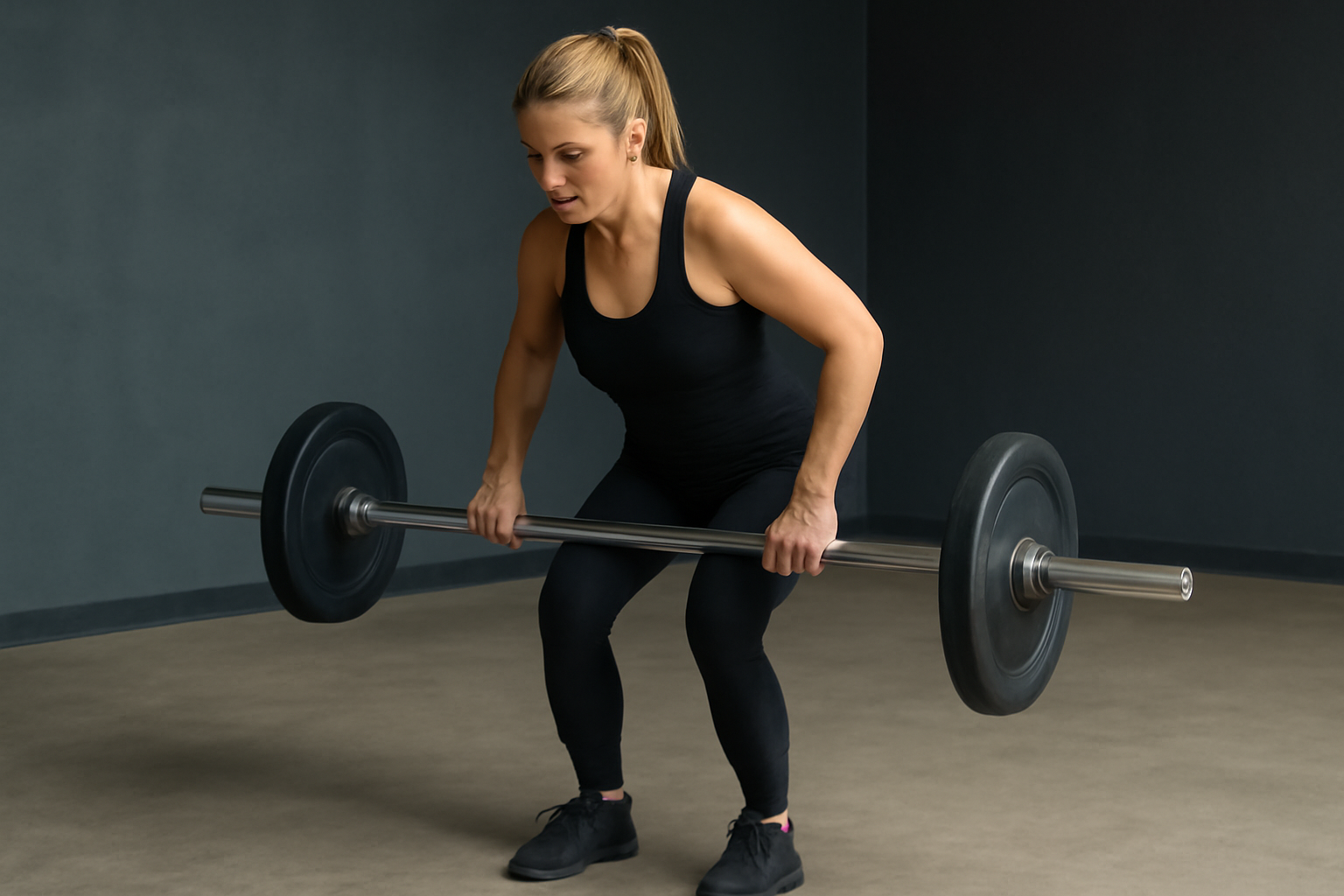
Performing a bent-over barbell row with the right form can help you avoid back pain and maximize your results. Follow these simple steps to ensure you're doing the exercise correctly and safely.
Step 1: Set Up Your Feet and Grip
Start by standing with your feet about shoulder-width apart. This stable base will help you maintain balance throughout the movement. Grip the barbell with your hands slightly wider than shoulder-width, keeping your palms facing down. This will allow you to engage your upper back muscles effectively.
Step 2: Hinge at the Hips, Not the Waist
To begin the row, bend forward at the hips, not the waist. Imagine pushing your hips back like you're trying to close a car door with your hips. This will keep your spine neutral and avoid unnecessary pressure on your lower back. Your torso should be at a 45-degree angle to the floor, but never too low—this will ensure you're engaging your back muscles instead of straining your spine.
Step 3: Maintain a Neutral Spine
As you hinge forward, it's essential to keep your spine in a neutral position. Avoid rounding your back or letting your shoulders slump forward. A neutral spine means your head, neck, and back are in a straight line, creating a stable foundation for the lift. Keep your chest lifted and your core engaged to support your back.
Step 4: Row the Barbell
Now, pull the barbell towards your lower ribs or upper stomach. Focus on squeezing your shoulder blades together as you row. Your elbows should travel along your body, not flaring out to the sides. This will ensure that the back muscles, not the arms, are doing most of the work.
Step 5: Controlled Descent
Once you've pulled the barbell up, lower it back down slowly and in a controlled manner. Don't let the bar drop. Control the weight on the way down to avoid any jerking motion that could strain your lower back. Keep the same neutral spine position as you lower the bar.
Key Tips for Preventing Back Pain During Bent Over Barbell Rows
Avoiding back pain during bent-over barbell rows comes down to using proper technique, taking preventive measures, and listening to your body. Here are some key tips to help you keep your back safe while maximizing your workout:
1. Engage Your Core
A strong, engaged core is essential for maintaining a stable spine during exercise. Tighten your abdominal muscles before you begin the row, as if you're preparing for a punch to your abdomen. These muscles will help support your spine and reduce the load on your lower back, making the movement safer and more effective.
2. Warm Up Properly
Always warm up before performing bent-over barbell rows. A proper warm-up prepares your back, hips, and shoulders for the load they will carry during the exercise. Consider doing dynamic stretches or light mobility exercises like cat-cow stretches, hip rotations, or bodyweight squats. These activities will help increase flexibility and reduce stiffness, making it easier to maintain proper form.
3. Use the Right Weight
Start with a lighter weight to ensure your form is perfect before progressing. Lifting too heavy, too soon, is a common cause of injury, as it forces your body to compensate with poor form. Once you have mastered the movement with a lighter load, gradually increase the weight to avoid strain and overexertion.
4. Avoid Overreaching or Jerking the Weight
When performing the row, avoid jerking the weight or overreaching the barbell. Quick, jerking movements can put unnecessary stress on your back and lead to injury. Instead, focus on controlled, steady movements to properly target the back muscles and avoid putting pressure on your spine.
5. Keep Your Head and Neck in Line with Your Spine
Many lifters make the mistake of looking up or down while performing bent-over rows, which can misalign the spine. Keep your head in a neutral position with your neck aligned with your spine. This posture ensures that the pressure is evenly distributed and reduces the risk of strain in your back.
6. Focus on Proper Breathing
Breathing is necessary to preserve stability throughout the lift. Inhale as you lower the barbell and exhale as you pull it up. Proper breathing will help keep your core engaged, which, in turn, helps stabilize your spine and prevents unnecessary pressure on your back.
Common Mistakes to Avoid During Bent Over Barbell Rows

Even the most seasoned lifters can fall into bad habits that lead to back pain. Here are some common mistakes to watch out for and tips on how to avoid them:
1. Rounding Your Back
One of the most dangerous mistakes in bent over barbell rows is rounding your back. This can put excessive strain on your lower back, leading to pain or injury. To avoid this, always keep a neutral spine. Imagine a straight line running from the top of your head to your tailbone. If you find yourself rounding, check your posture and adjust your form.
2. Using Too Much Weight
Lifting too heavy can cause you to sacrifice form, which increases your risk of injury. If the weight feels too heavy to maintain proper form, lower it. Start with a light weight, focusing on technique, and only increase it as you get more comfortable.
3. Overextending the Hinge
When you bend over for the row, make sure you're not overextending your hips or leaning too far forward. This can cause strain on your back and take the focus away from your back muscles. Keep your torso at about a 45-degree angle to the floor. If you're going too low, you might not be engaging your muscles correctly.
4. Flaring Your Elbows
As you row the barbell up, keep your elbows tucked in close to your body. Flaring your elbows out to the sides reduces the exercise's effectiveness and increases strain on your shoulder joints. Imagine driving your elbows along your sides like you're trying to pinch your shoulder blades together.
5. Jerking the Weight
Using momentum to jerk the barbell up is another common mistake that can lead to back pain. When you jerk the weight, you rely on speed instead of muscle engagement, which can throw your form off. Focus on controlled, steady movements. Both the lift and the descent should be slow and deliberate to maximize muscle engagement.
6. Not Engaging Your Lats
Failing to activate your lats during the row can place unnecessary strain on your lower back. To engage your lats properly, consider pulling your elbows back rather than just lifting the bar. This will help activate the right muscles and prevent overloading the lower back.
How to Progress and Increase Weight Safely

Increasing the weight in your bent over barbell rows is essential for building strength and muscle. However, it's important to do this safely to avoid injury, especially to your back. Here's how you can progress gradually while maintaining good form:
1. Start with Light Weights
If you're new to bent over barbell rows or unsure about your form, start with a lightweight. Focus on mastering your technique first, even before considering adding more weight. Once you feel confident in your form, you can begin to increase the weight gradually in small increments.
2. Follow Progressive Overload
Progressive overload is the practice of gradually increasing the weight, reps, or sets over time to continuously challenge your muscles. Start by adding small increments of weight (e.g., 2.5 to 5 pounds per side) when you can comfortably complete your sets with good form. Don't rush to lift heavier weights too quickly. Let your body adapt to the current load before adding more.
3. Add Volume Before Weight
Another way to increase intensity without compromising form is by adding more volume. This means increasing the number of sets or reps you perform rather than jumping straight to heavier weights. This approach gives your muscles more time under tension, which promotes growth while keeping your back safe from overloading.
4. Focus on Strengthening Support Muscles
While building back strength is important, don't forget to work on your core and other stabilizing muscles. Strong abdominal muscles, glutes, and hamstrings provide the support your lower back needs during the row. Incorporate exercises like planks, deadlifts, and glute bridges into your routine to build a strong foundation that supports heavier lifts.
5. Maintain Perfect Form at Every Weight Level
No matter how much weight you're lifting, always prioritize good form. Suppose your form starts to slip as you increase weight, back off, and reduce the load. It's better to lift lighter weights with perfect form than to risk injury with heavier weights and poor technique.
6. Use Proper Rest and Recovery
Your muscles need time to recover after lifting heavy weights. Overtraining can lead to muscle fatigue, which may result in poor form and an increased risk of injury. Make sure to give your body enough time to rest between sessions and consider incorporating stretching and foam rolling to improve mobility and prevent stiffness.
Frequently Asked Questions
1. How do I avoid back pain when bent over barbell rows?
To avoid back pain when bent over barbell rows, focus on maintaining a neutral spine throughout the movement. Engage your core muscles, avoid rounding your back, and use a proper hip hinge. Make sure you're lifting an appropriate weight for your current strength level, and always prioritize form overload.
2. What muscles do bent over barbell rows target?
Bent over barbell rows primarily target the upper back, including the latissimus dorsi (lats), rhomboids, and traps. Additionally, the movement engages the lower back (erector spinae), core, and even the glutes and hamstrings to help stabilize your body during the row.
3. What is the best form for a bent over barbell row?
The best form includes a neutral spine, with your back straight and chest slightly lifted. Hinge at the hips, not at the waist, and keep your torso at a 45-degree angle. Pull the barbell toward your lower ribs while keeping your elbows close to your body and squeezing your shoulder blades together.
4. How can I warm up properly for bent-over barbell rows?
To warm up for bent over barbell rows, perform dynamic stretches and mobility exercises like cat-cow stretches, hip rotations, and bodyweight squats. This helps activate the muscles involved in the movement, preparing your body for the workout ahead and reducing the risk of injury.
5. How often should I do bent over barbell rows?
The frequency of bent-over barbell rows depends on your training program and goals. For general strength and muscle building, performing the row 2-3 times per week is effective. Be sure to allow adequate rest between sessions to let your muscles recover and avoid overtraining.
6. What is the difference between a bent over barbell row and a dumbbell row?
The main difference is the equipment used. A bent-over barbell row uses a barbell, which requires both hands to work together, allowing you to lift heavier weights. In contrast, a dumbbell row allows for a greater range of motion. It works on each side of the back independently, which can help correct muscle imbalances.
Final Thoughts
To sum up, we've learned how to avoid back pain during bent-over barbell rows. By focusing on good form, engaging your core, and warming up, you can protect your back and get better results. Start using these tips today, and you'll notice fewer aches and stronger muscles.
Now, it's time to act. Apply what you've learnt and watch your strengths grow. Consistency and correct technique are the keys to success.
If you're ready to take your home workouts to the next level, Hamilton Home Fitness has the equipment you need. We offer top-quality gear that will help you perform every exercise safely and effectively. Whether you're adding a new barbell or upgrading your gear, we've got you covered.
We'd love to hear your thoughts. Please share your experience in the comments below or pass this post along to someone who could use it. And don't forget to check out Hamilton Home Fitness for more tips and resources to enhance your home gym.