Introduction
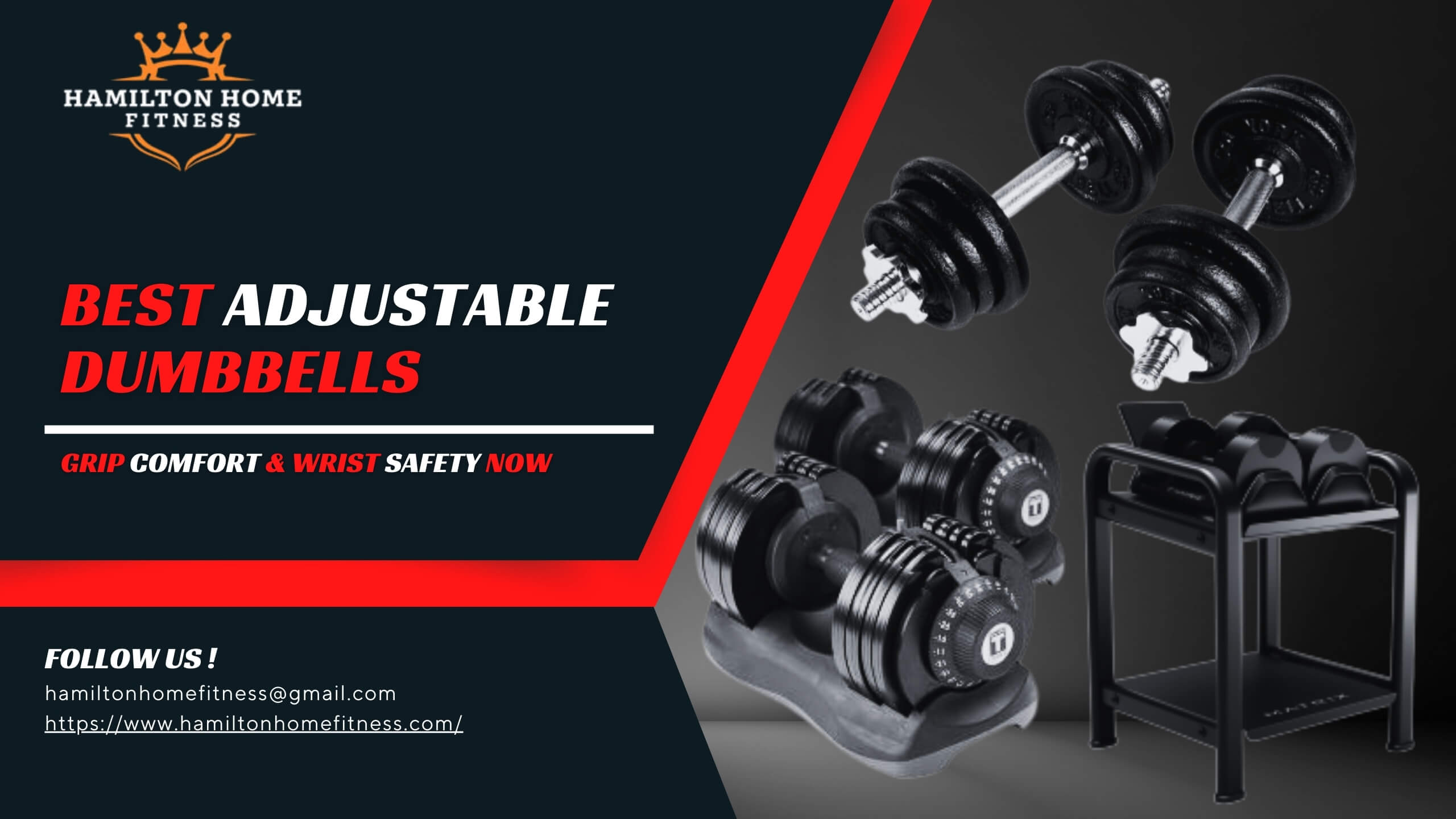
If you’re shopping for the Best adjustable dumbbells, grip comfort and wrist safety matter as much as the max weight. Many adjustable sets feel “awkward” because the handle is thicker, the heads are bulkier, or the weight sits farther from your hand than a fixed dumbbell. That can change how your wrist lines up on presses, how close the bell stays on rows, and how steady it feels on curls.
This guide is for home gym lifters, trainers, and facilities across the USA who want dumbbells that feel good rep after rep—especially if you have small hands, sensitive wrists, or joint flare-ups. You’ll learn how to judge handle diameter, knurling vs rubber grips, block/cage vs round heads, and dumbbell length interference, so you can pick a joint-friendly setup that fits your lifts.
Here’s the “real life” test we’ll use: hold a dumbbell for 30–45 seconds, do 5 slow presses, then 5 slow rows. If your wrist bends, your forearm gets hit, or your grip slips when your hands get warm, the design isn’t right yet. We’ll show simple fixes (cleaning, chalk-at-home tips, technique tweaks) and how Hamilton Home Fitness (Tennessee-based) options can match your comfort needs without guessing later.
Why they feel awkward (fix it)
Adjustable dumbbells often feel awkward because their shape, balance, and length can change how the weight sits in your hand compared to fixed dumbbells. The good news: once you know why it feels off, you can choose a design that feels more natural—and safer—before you buy.
Why adjustables feel awkward
Most “awkward” feelings come from three things: a thicker handle diameter, bigger head size, or a different center of mass (the weight sits farther from your grip). You may notice this fast on a floor press (wrists bend back), rows (the bell bumps your ribs), or curls (elbows flare). Use this quick check: do the heads hit your forearm, does the grip force your wrist out of neutral, or does the dumbbell feel “front-heavy”? For a simple checklist, follow adjustable dumbbells safety checks.
Do they change your form?
Yes, they can—especially if the dumbbell is long or blocky and you start steering around it. A simple self-test: film 5 slow reps of a press and a row. If your wrist angle changes, your elbow path shifts, or you shorten range of motion to avoid contact, the design is pushing your form. Common mistake: gripping harder instead of choosing a better wrist neutral grip setup.
Are longer ones harder to control?
Often, yes. Dumbbell length interference makes it easier to wobble, bump your body, or lose overhead press clearance. As a decision rule: the more you press overhead or row heavy, the more you’ll prefer compact, well-balanced designs. If you’re comparing “loadable” styles, use adjustable dumbbells loadable guide. to match control needs to your training.
Best adjustable dumbbells: grip feel
The Best adjustable dumbbells feel secure without forcing a death-grip. Comfort comes from matching grip thickness (handle diameter) and surface texture to your hands, then making sure the handle doesn’t create “hot spots” during presses, rows, and curls.
Most comfortable grip features
The most comfortable grips usually share three traits: they fit your hand, they have usable texture, and they don’t pinch when the weight moves. Use this quick scorecard while testing a set:
- Fit: Can you wrap your fingers fully without your fingertips jamming into your palm?
- Texture: Does the textured handle help when your hands get warm, or does it feel sharp?
- Pressure points: After 10 slow reps, do you feel one painful spot on your palm?
Proof pattern we’ll use later: a 60-second “hold + 5 reps” test on curls, presses, and rows to spot slippery grip and knuckle pressure early.
What handle diameter is best?
The best handle diameter adjustable dumbbells depends on your hand size and joint comfort: smaller hands usually prefer a slimmer feel, while some lifters like a thicker handle for grip strength training. A simple rule: if you can’t keep a wrist neutral grip because the handle feels too thick, it’s not the right match. For a practical choosing process, use How to choose adjustable dumbbells.
Knurling or rubber grips?
Knurled handle options usually feel more secure when you sweat, while a rubber grip handle can feel softer but may get slick depending on material and skin oils. If your hands sweat, try this troubleshooting ladder first: wipe the handle, dry your hands, then consider chalk use at home (light, controlled) before glove use for lifting—gloves can reduce feedback and still slip if sweaty.
Wrist comfort by design
Wrist comfort depends most on head shape, handle placement, and balance, because those decide whether you can keep a wrist neutral grip without the dumbbell bumping your forearm.
Do blocks hit wrists in presses?
Yes, block-style dumbbells can hit your wrists or forearms during presses for some lifters, especially on floor press and incline press. The usual cause is block dumbbells forearm contact: the edge of the block sits close to your wrist line, so as you lower the weight, it taps or rubs.
Quick fixes to test right away:
- Rotate to a slightly more neutral wrist and keep the handle deep in the palm
- Shorten the bottom range only if contact is painful (don’t “bounce” through it)
- Choose a design with smaller dumbbell head size if pressing is your priority
Best design for wrist comfort
The best design for wrist comfort is the one that feels balanced at the center of mass and stays clear of your forearm in the bottom position. Many people find round head dumbbells feel smoother in presses, while some cage dumbbells range of motion designs can feel bulkier near the wrist. If you’re comparing shapes and want comfort-first options, start your shortlist by shopping for Best adjustable dumbbells.
Overhead comfort and clearance
Overhead work needs clearance. If the dumbbell is long, overhead press clearance can suffer, especially if you have limited shoulder mobility with dumbbells. A simple proof test: do 5 slow overhead presses and one controlled overhead triceps extension—if you feel forced to flare elbows or arch hard, the length and head shape may be interfering.
Do they work for key lifts?
Yes—adjustable dumbbells can work well for big home-gym staples, but the “best” design depends on clearance, head shape, and comfort at the bottom of the rep. Use the lift itself as the test, not just how the dumbbell feels in your hand.
Goblet squats: comfort & hold
Yes, adjustable dumbbells usually work for goblet squats, as long as the head shape doesn’t dig into your wrists or chest. The main issue is goblet squat comfort: wide blocks or sharp edges can feel awkward against the forearms.
Quick hold checks:
- Can you keep elbows down without wrist strain?
- Does the dumbbell head size press uncomfortably into your sternum?
- Can you breathe and brace without shifting the bell around?
Rows and chest presses fit?
Yes, they can be great for rows and presses, but dumbbell length interference and head bulk can change range of motion. Most lifters notice this first on floor press comfort (wrists bend or forearms get bumped) and on rows (bell taps ribs or hip).
A simple “fit test”:
- Do 5 slow floor presses: wrists stay neutral, no forearm contact.
- Do 5 slow one-arm rows: bell stays close without bumping your side.
- If contact happens, it’s often a shape issue (block/cage bulk) more than a strength issue.
Can comfort affect muscle growth?
Yes—if the grip slips or your wrists hurt, you’ll likely cut reps short, reduce load, or avoid certain lifts, which lowers training quality over time. The fix is usually not “tough it out,” but smarter progression and a more joint-friendly setup.
For recovery-focused or senior-friendly progressions, smaller jumps often feel better than big jumps—see adjustable dumbbells: 2.5 vs 5 lb .
People Also Ask
Why do adjustable dumbbells feel awkward compared to fixed?
They can feel awkward because the weight sits differently in your hand—often with longer heads or a different center of mass than fixed dumbbells. That can change your wrist angle and how close the bell stays to your body.
- Common cause: longer dumbbell length bumps ribs on rows or limits press depth
- Quick check: do 5 slow reps—if you shorten range to avoid contact, it’s the design
- Condition: block/cage shapes can feel bulkier at the bottom of presses
Which adjustable dumbbells have the most comfortable grip?
The most comfortable grips usually match your hand size and stay secure without forcing a hard squeeze. Comfort comes from handle diameter plus texture that works when your hands warm up.
- Example test: hold 30–45 seconds, then do 5 presses—no hot spots = good sign
- Look for: even texture (knurling or non-slip coating) without sharp edges
- Condition: if your wrist bends to “fit” the grip, it’s too thick
What handle diameter is best for adjustable dumbbells?
The best handle diameter depends on your hand size and whether you can keep a neutral wrist. If the handle feels too thick, you’ll fatigue early and lose control.
- Condition: small hands often do better with a slimmer grip thickness
- Example: if you can’t wrap fingers fully, the grip may be too large
- Watch for: wrist drifting back on presses
Is knurling better than rubber grips?
Knurling is often better for traction, especially with sweaty hands, while rubber can feel softer but may get slick. The “better” choice depends on whether you value grip security or softer feel.
- Example condition: sweaty hands during a 10–15 minute session favors knurling
- Rubber can work well if it stays tacky and doesn’t rotate in your palm
- If it slips, fix the surface before changing form
Do block-style dumbbells hit your wrists during presses?
They can, especially if the block edges sit close to your wrist line at the bottom of the rep. This is most noticeable on floor press and incline press.
- Condition: contact risk rises when you press deep and the heads are wide
- Example: if the edge taps your forearm on 5 controlled reps, it’s not a fluke
- Fix: choose a more compact head shape for press-heavy plans
Are longer adjustable dumbbells harder to control?
Often yes—extra length can increase wobble and bumping, especially in rows and overhead work. Longer heads can also change your balance and bar path.
- Example condition: overhead press clearance gets harder if heads hit at the top
- More length = more chance of “steering” the dumbbell around your body
- Best move: prioritize compact designs for heavy pressing
What’s best for small hands?
Small hands usually do best with a slimmer handle and reliable texture that doesn’t require a death-grip. The goal is control without wrist strain.
- Example: you should be able to wrap fingers fully and keep a neutral wrist
- Avoid: overly thick grips that force your thumb to “reach”
- Condition: if curls cause elbow flare, grip size may be a factor
What’s best for arthritis or joint pain?
A joint-friendly option is one that lets you keep a neutral wrist and progress in small steps. Pain causes vary, so persistent or sharp pain should be checked by a qualified professional.
- Example condition: smaller jumps like 2.5 lb can feel smoother than bigger jumps
- Prioritize: secure grip (no slipping) and a comfortable handle texture
- Avoid: forcing range of motion when the head hits your forearm
Do adjustable dumbbells work for goblet squats?
Yes, most do, as long as the head shape feels comfortable against your forearms and chest. Comfort is the limiter, not strength.
- Example test: hold the bell at chest height for 20 seconds—no digging = good
- Condition: wide blocks can press into wrists or sternum
- Fix: adjust hold position or choose a rounder/compact head
Do adjustable dumbbells work for overhead triceps extensions?
They can, but longer or bulky heads may reduce comfort and overhead clearance. If the bell forces awkward elbow flare, it’s not the right shape for that lift.
- Example test: do 5 slow reps—no head bumping behind the skull
- Condition: limited shoulder mobility makes long designs harder
- Alternative: use a different grip angle or a shorter design
How do I stop the grip from slipping when sweaty?
Start by improving friction and dryness before changing technique. Most slipping is fixable with simple steps.
- Example: wipe handle + dry hands every 5 minutes during high-sweat sets
- Condition: chalk can help if allowed in your home setup and used lightly
- Avoid: squeezing harder as the only solution (it can irritate wrists/elbows)
Are adjustable dumbbells good for rows and chest presses?
Yes, but the head size and length can limit range of motion or bump your body. Compact, well-balanced designs tend to feel better for presses and rows.
- Example condition: if the bell hits ribs on rows in 5 controlled reps, it’s too bulky
- Floor press: watch for forearm contact at the bottom
- Fix: adjust elbow path or choose a smaller head profile
Do adjustable dumbbells change your form?
They can if the shape forces you to move around the dumbbell instead of moving the dumbbell around you. The goal is to keep the same joint angles you’d use with fixed weights.
- Example: if your wrist angle changes between rep 1 and rep 5, form is drifting
- Common issue: shortening depth to avoid head contact
- Fix: choose a design that clears your body at the bottom
What’s the best design for wrist comfort?
The best design keeps your wrist neutral and avoids forearm contact through the full rep. Balance and clearance matter more than “looks.”
- Condition: press-heavy training often prefers compact heads with smoother clearance
- Example test: 5 slow presses—no wrist bend-back, no forearm tapping
- Avoid: designs that force rotation to “find space”
Can grip comfort affect muscle growth results?
Yes—if the grip hurts or slips, you’ll likely do fewer reps or avoid certain lifts, which reduces training quality over time. Comfort supports consistency and effort.
- Example condition: stopping a set 2 reps early due to grip pain reduces volume
- Fix-first: improve grip security and wrist alignment before adding load
- Keep it simple: comfort that lets you train hard matters more than fancy features
Final Thought
You can now choose the Best adjustable dumbbells by focusing on what actually protects comfort: handle diameter, grip texture (knurling or rubber), and a wrist-friendly design that doesn’t hit your forearm or limit your range of motion. The single takeaway is simple: wrist safety and comfort come from matching the dumbbell design to your hand size and movement clearance, not just chasing the biggest weight number.
If you want to take the next step, compare options from Hamilton Home Fitness using the decision rules you just learned—especially the quick “hold + 5 reps” test for presses and rows. Start here: Shop Quality Fitness Gear and Equipment - Hamilton Home Fitness
Before you buy, it’s smart to understand coverage and expectations so you feel confident long-term. Use this reassurance step: adjustable dumbbells warranty guide